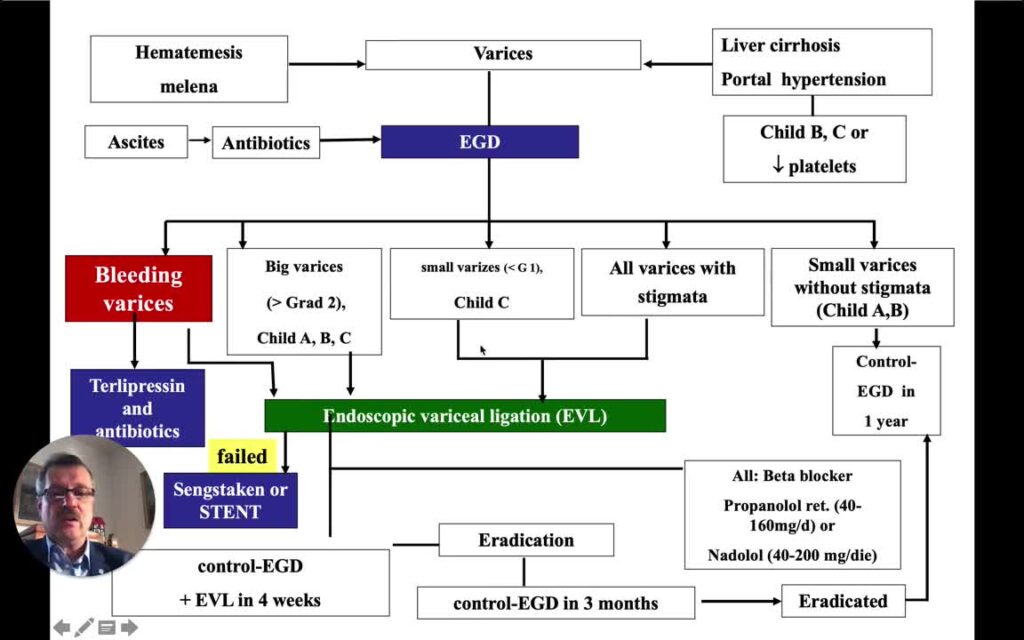
Endoscopic Therapy for Esophageal and Gastric Varices (22-min): Full Course lecture in Basics in Endoscopy on EndoCollab. Free guest video preview; Pro.
Bleeding esophageal and gastric varices still carry high short-term mortality and frequent rebleeding. This overview covers natural history (portal pressure threshold around 12 mmHg for rupture risk), why band ligation replaced routine sclerotherapy for esophageal varices (better hemostasis, fewer ulcers/bacteremia), and how to risk-stratify columns for stigmata such as red wales or a hematocystic spot. Distal esophageal varices are the usual bleeders; the lecture also flags downhill varices and the need to inspect the whole examined tract. Gastric variceal bleeding is introduced with histoacryl injection as the acute mainstay, with notes on cardiofundal anatomy and a pointer to separate talks on salvage tools (including removable stents and balloon tamponade devices). Beta blockers after endoscopic control are reinforced as part of ongoing care.
Continue with EndoCollab membership.
Get this lecture, the rest of this course, and the full EndoCollab library.
Course: Basics in Endoscopy · Browse all lessons in Basics in Endoscopy
Continue reading with a membership
Get access to the full content, course videos, case library, and our private WhatsApp community.
Already a member? Log in
We protect your privacy. No spam. Unsubscribe anytime.