Polypectomy: Which Snare for Which Polyp? (52-min): Full Course lecture in Basics in Endoscopy on EndoCollab. Free guest video preview; Pro members.
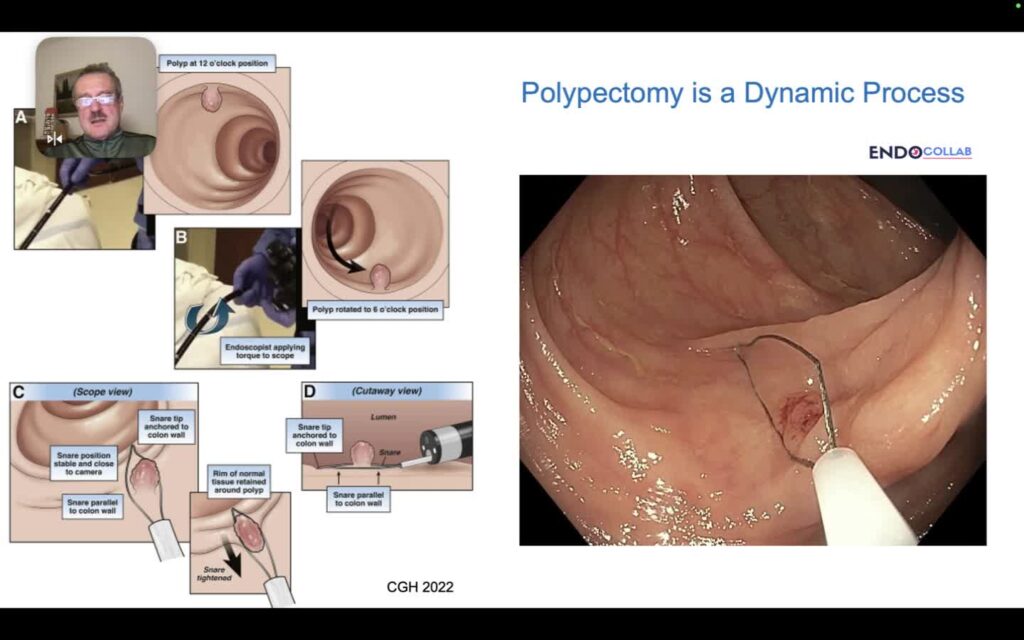
Snare selection is treated as a clinical decision, not a catalog browse. The lecture classifies snares by wire (braided vs monofilament), shape (oval, hexagonal, asymmetric, and related profiles), size/length, and catheter diameter so they still suction through 2.8 to 3.2 mm channels. Technique is shown as a dynamic process: inspect surface and location, decide on lift for margin/safety, park the catheter nearly flush, open the snare off the lesion, then torque/wheel the scope so the lesion sits centered before closing. Cold snare examples sit beside hot work, and EMR history is used to justify saline cushions when folds hide depth (less deep injury, better lateral/vertical margin). Assistants are part of the system: coordinated handle closure while the endoscopist advances and positions. Takeaways are which snare traits fit which polyps, plus reproducible positioning and cushion habits.
Continue with EndoCollab membership.
Get this lecture, the rest of this course, and the full EndoCollab library.
Course: Basics in Endoscopy · Browse all lessons in Basics in Endoscopy
Continue reading with a membership
Get access to the full content, course videos, case library, and our private WhatsApp community.
Already a member? Log in
We protect your privacy. No spam. Unsubscribe anytime.