Wire-guided basket extraction: a step-by-step guide to when freehand fails, how to load a standard basket over the wire, and how to finish with leverage when the stone will not come.
You have a complex stone in a dilated, irregular bile duct after secondary cholangitis. A freehand basket may never reach the left intrahepatic system. If the note only says “difficult extraction,” the next endoscopist cannot reconstruct why wire guidance was needed.
Why Freehand Basket Access Falls Short
Klaus Mönkemüller frames difficult stone work around controlled basket placement. In a sclerosed, irregular duct, placing the basket into the right and left hepatics is safer and more predictable over a guidewire.
Even when a freehand basket occasionally finds the left system, you will not always be that lucky. Wire guidance turns an unreliable pass into a controlled one.
So difficult stone ERCP has two jobs: choose the right path into the duct, then extract with enough distal force. This clip is the shared playbook for both.
Step 1: Spot the Case That Needs a Wire
Start with the anatomy in front of you. Irregular stones in an irregular, dilated duct after secondary cholangitis are the classic setup. Direct basket cannulation is unreliable. Freehand left-system access is a hope, not a plan.
Video moment @ 0:00
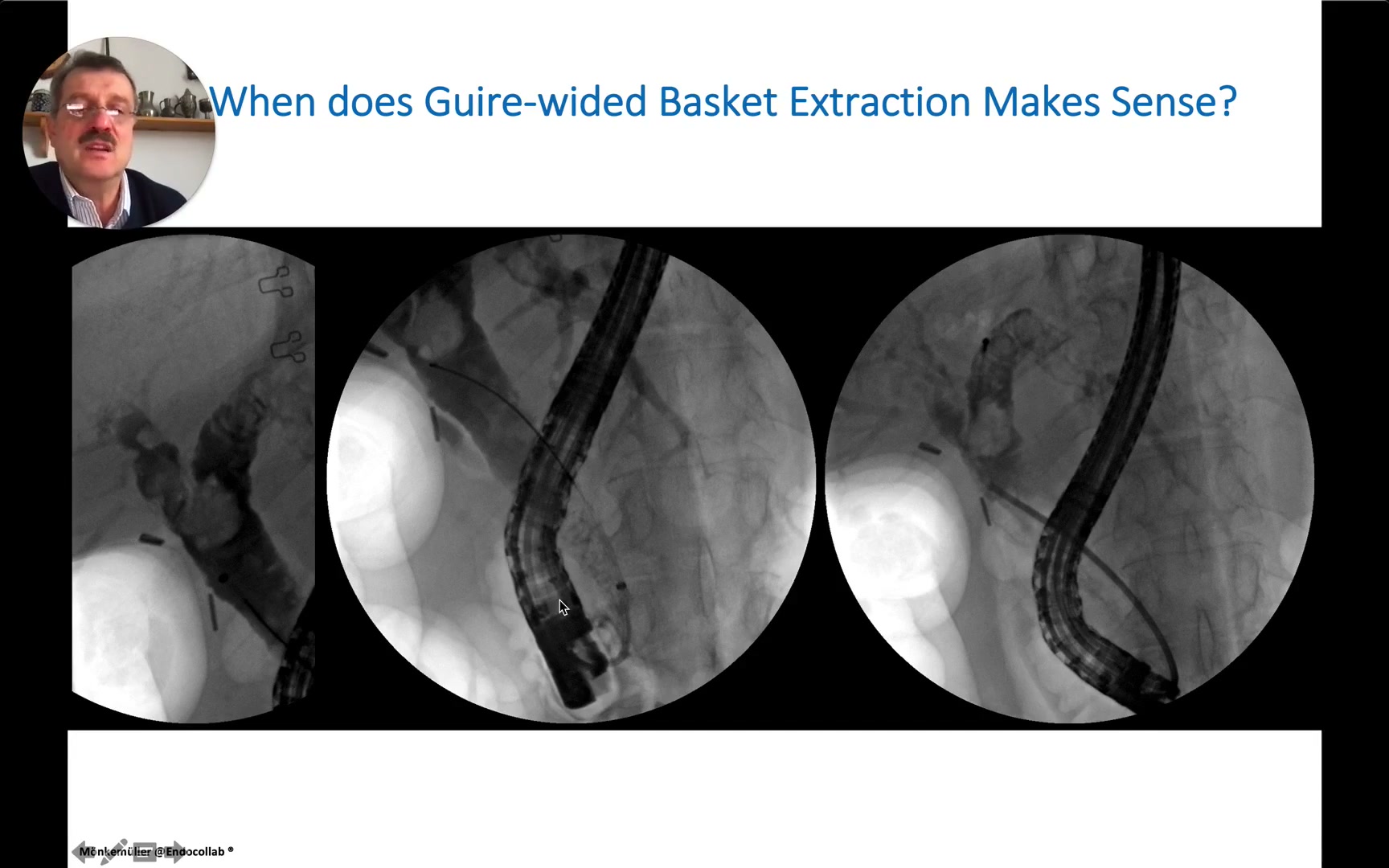
Significance: Do not keep forcing freehand basket passes in sclerosed ducts. Decide early that the wire leads.
Step 2: Apply the Three Rules
Klaus uses three practical rules for when guidewire-aided basket extraction makes sense:
- Swollen papilla: direct cannulation with the basket is not easy
- Pull-and-trap geometry: the closed basket cannot pass beside the stone
- Intrahepatic stones: especially left-sided stones that freehand baskets miss
Video moment @ 1:18
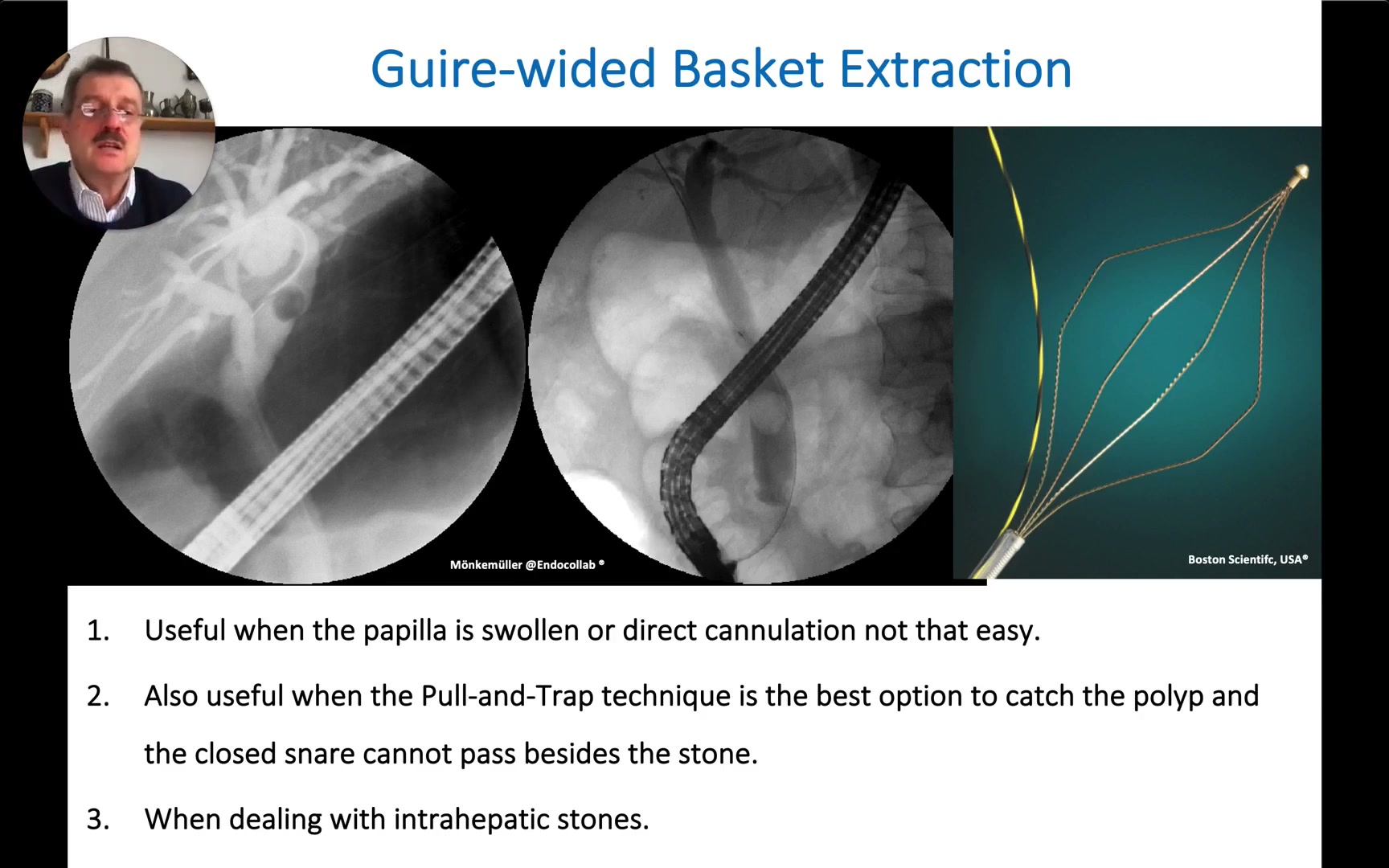
Significance: These three triggers are the shared vocabulary. “Hard stone case” does not travel. “Left intrahepatic stone, wire-guided basket” does.
Step 3: Build a Homemade Wire-Guided Basket
Not every basket ships as a wire-guided device. No problem. Place the wire deep into the preferred duct first. Then open the Dormia or stone basket, feed the proximal wire end through the open mesh, close lightly, and advance the basket over the wire into the working channel.
Video moment @ 2:05
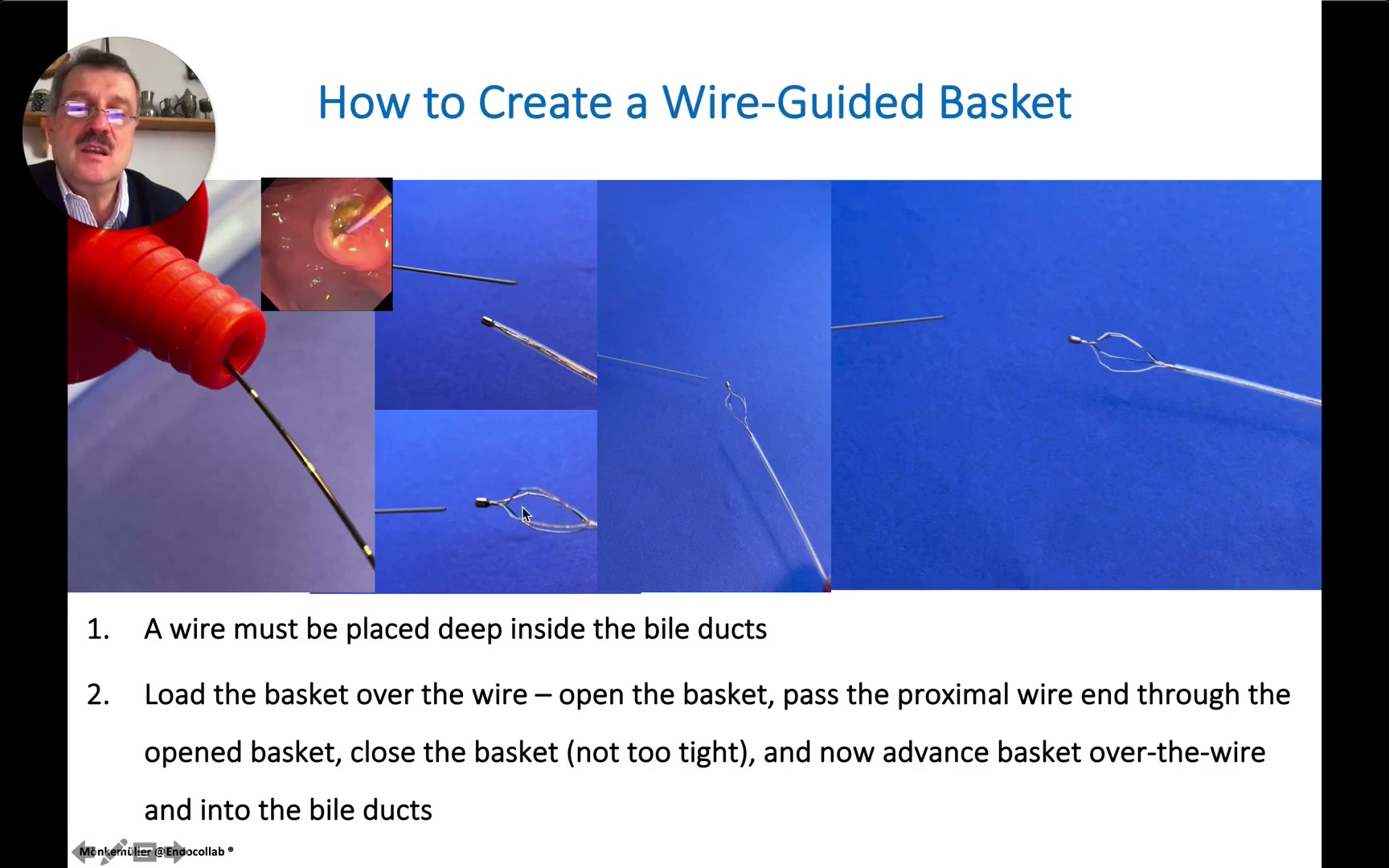
Significance: Any standard basket can become wire-guided in the room. Close enough to hold the wire. Loose enough to slide.
The result you want in the note looks like this:
Extraction plan: wire-guided basket for left intrahepatic stone; pull-and-trap; leverage if distal pull fails.
Continue with a membership
Members get the leverage technique walkthrough, a paste-ready extraction checklist, the full workflow summary, and the complete 6-minute video with captions.
Same format as our Prague classification guides: actionable steps you can use on the next case.
Already a member? Log in
Continue reading with a membership
Get access to the full content, course videos, case library, and our private WhatsApp community.
Already a member? Log in
We protect your privacy. No spam. Unsubscribe anytime.