Close the vessel, not the papilla.
Short stem. Sheath stays on. 11 mm on the vessel. Leave the orifice open.
Post-sphincterotomy bleeding is a small vessel on the edge of a cut you still need. A long stem hangs on the elevator. A wide jaw closes the papilla. Look at the clip on the table before it goes down the scope.
1. Look before you open it
The parts that matter are the arms and the stem. Opening the clip also drives it forward. Plan for that advance or you overshoot the vessel.
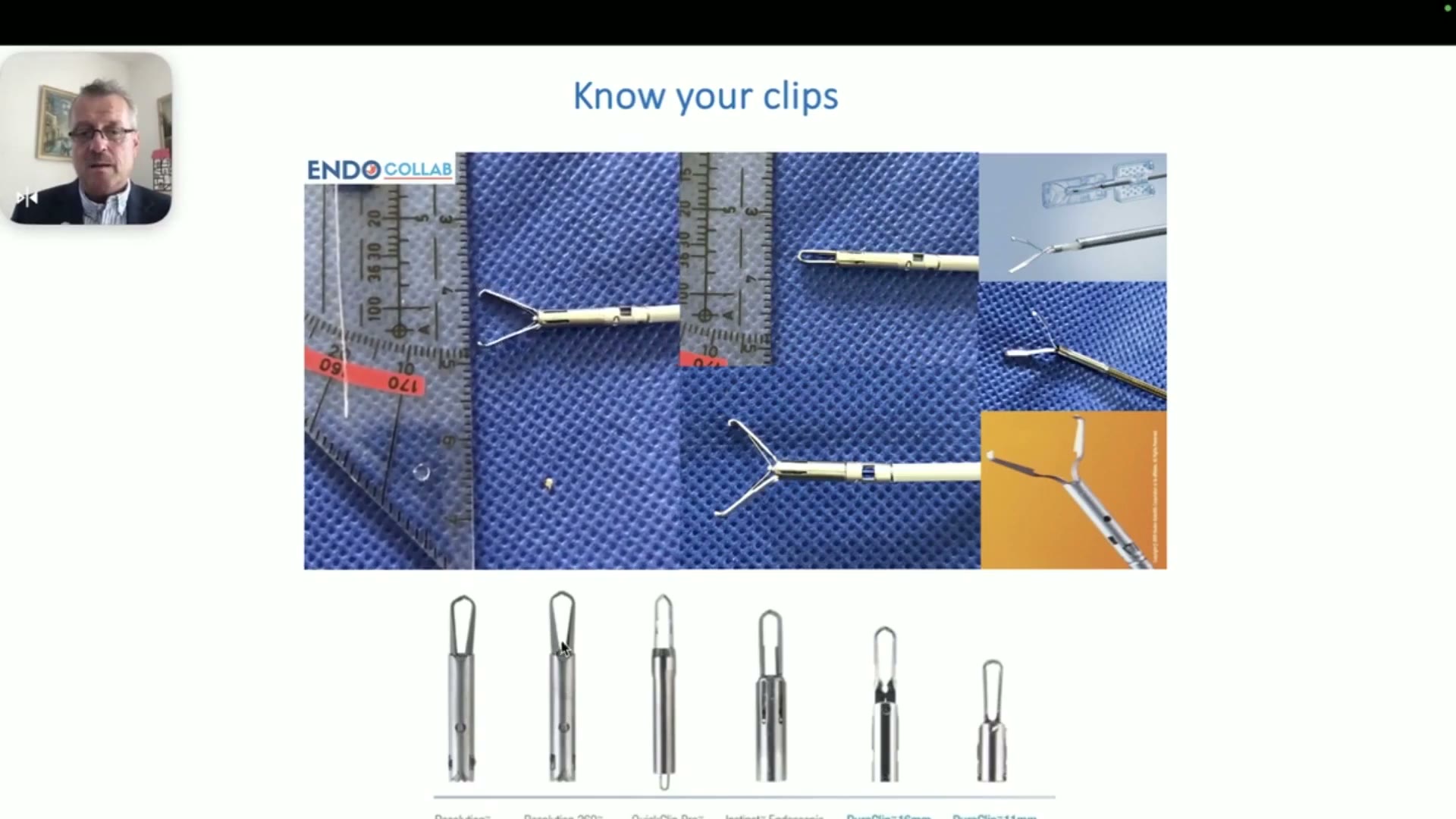
2. Short stem. Sheath stays on.
The ERCP slide arrows the two shortest hemostasis clips, DuraClip 11 mm and DuraClip 16 mm. A long stem sticks at the elevator. If the clip comes with a sheath, leave it on. Through a side-viewing scope the sheath keeps the clip from falling off. Expose the stem, open the jaws, then bow up and down to aim.
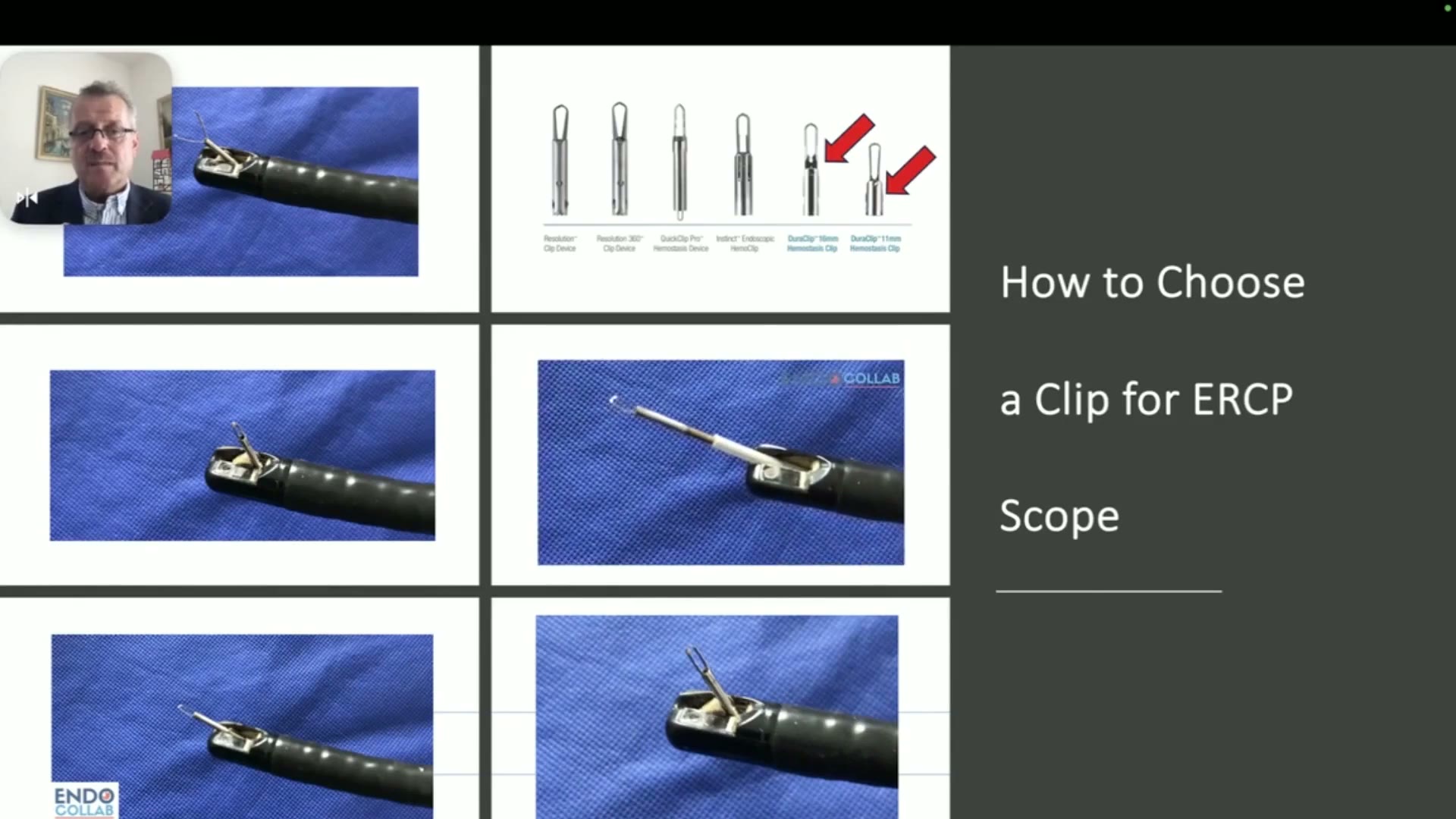
3. 11 mm on the vessel
Close the vessel. Leave the papilla open. On the comparison slide the Boston Scientific Resolution opening is marked 11 mm. The Cook Instinct is marked 13 mm and 16 mm. For this bleed, 11 mm is enough. Rotation matters less through a duodenoscope than it does when you can face the vessel head-on. You still need to know how far the arms open.
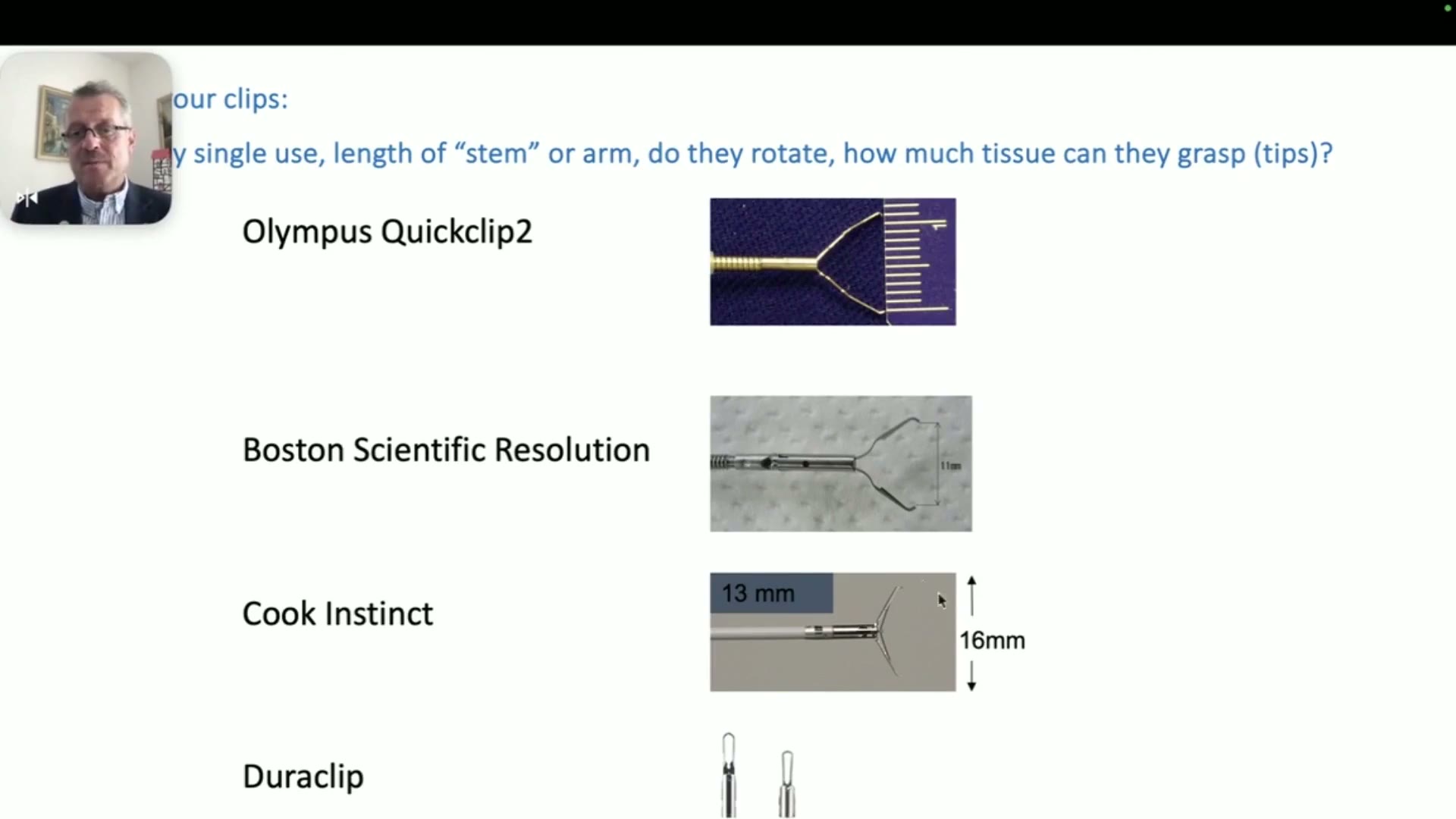
Line for the note
Post-sphincterotomy bleed. Short-stem clip on the vessel. Papilla left open.
Still in the member half
How the cap holds the clip open. What to do with only a forward-viewing scope. The full note to paste.
Same shape as the Prague guides: the next steps, then a line you can use on the next case.
Already a member? Log in
Continue reading with a membership
Get access to the full content, course videos, case library, and our private WhatsApp community.
Already a member? Log in
We protect your privacy. No spam. Unsubscribe anytime.