Massive hematemesis. The anastomosis is one day old.
A 3-minute case from my upper GI bleeding rescue lecture. Watch the case, pick your move, then see what we did.
This is the call nobody wants on the first night after a Whipple. The patient is bleeding fast. The surgical anastomosis is fresh. Every option has a cost.
1. The case
A 53-year-old woman on the first postoperative day after a Whipple gastropancreatoduodenectomy for a pancreatic head tumor. She developed massive hematemesis. Her hemoglobin dropped from 9.6 to 5.6 g/dL, with hypotension and tachycardia.
2. Why this one is hard
This was a very difficult situation because of the fresh anastomosis. Whatever you do next has to respect a suture line that is 24 hours old.
3. What would you do?
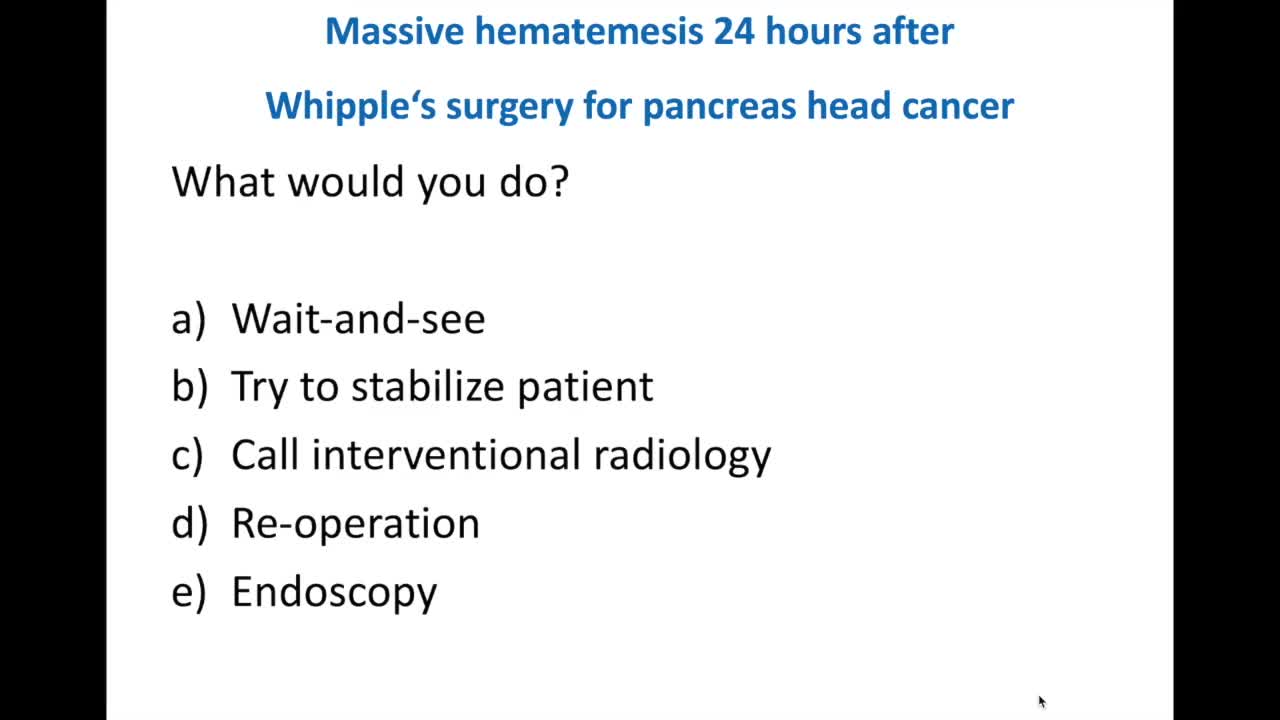
Pick one before you read on:
A. Wait and see.
B. Try to stabilize the patient.
C. Call interventional radiology.
D. Re-operate.
E. Endoscopy.
Why is massive bleeding 24 hours after a Whipple procedure so difficult?
The surgical anastomosis is only one day old. In this case the patient had massive hematemesis, a drop in hemoglobin from 9.6 to 5.6 g/dL, hypotension and tachycardia on the first postoperative day.
What are the options for massive hematemesis after Whipple surgery?
The lecture lists five: wait and see, try to stabilize the patient, call interventional radiology, re-operate, or perform endoscopy.
What we did next is at 0:29
Which option, and the one step we took before we touched the bleeder.
Members watch the full 3-minute clip: the choice, how we set up the room, the step that protected the fresh anastomosis, and the checklist for the next case. Plus the full lecture and every other course video.
Watch the answer: $29.99 a month
Cancel anytime. Or save with the yearly plan.
Already a member? Log in and the full clip plays.
Continue reading with a membership
Get access to the full content, course videos, case library, and our private WhatsApp community.
Already a member? Log in
We protect your privacy. No spam. Unsubscribe anytime.