Two Techniques That Prevent Bleeding Before You Cut
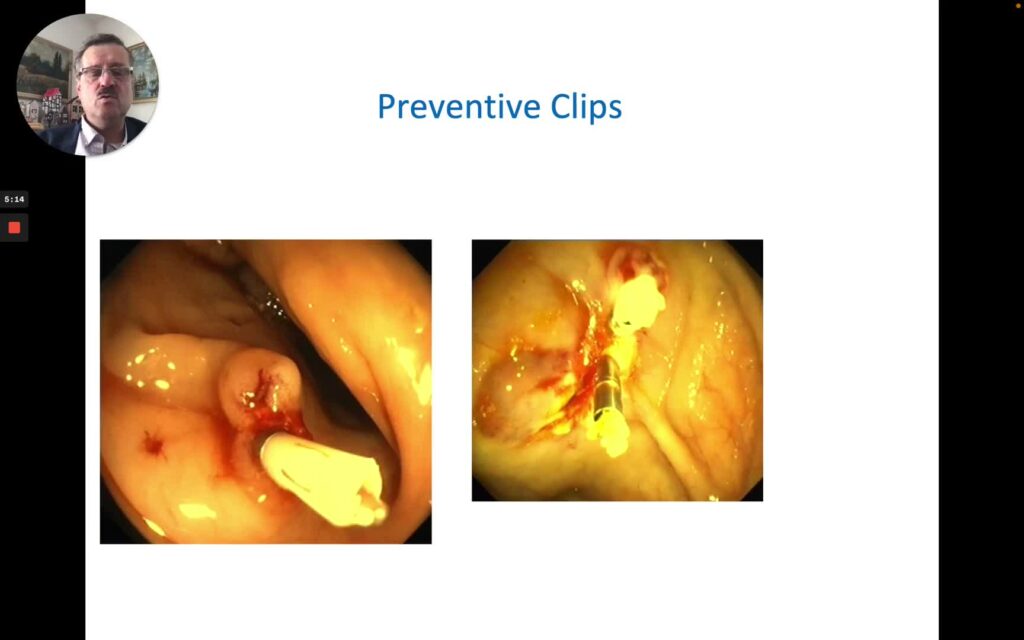
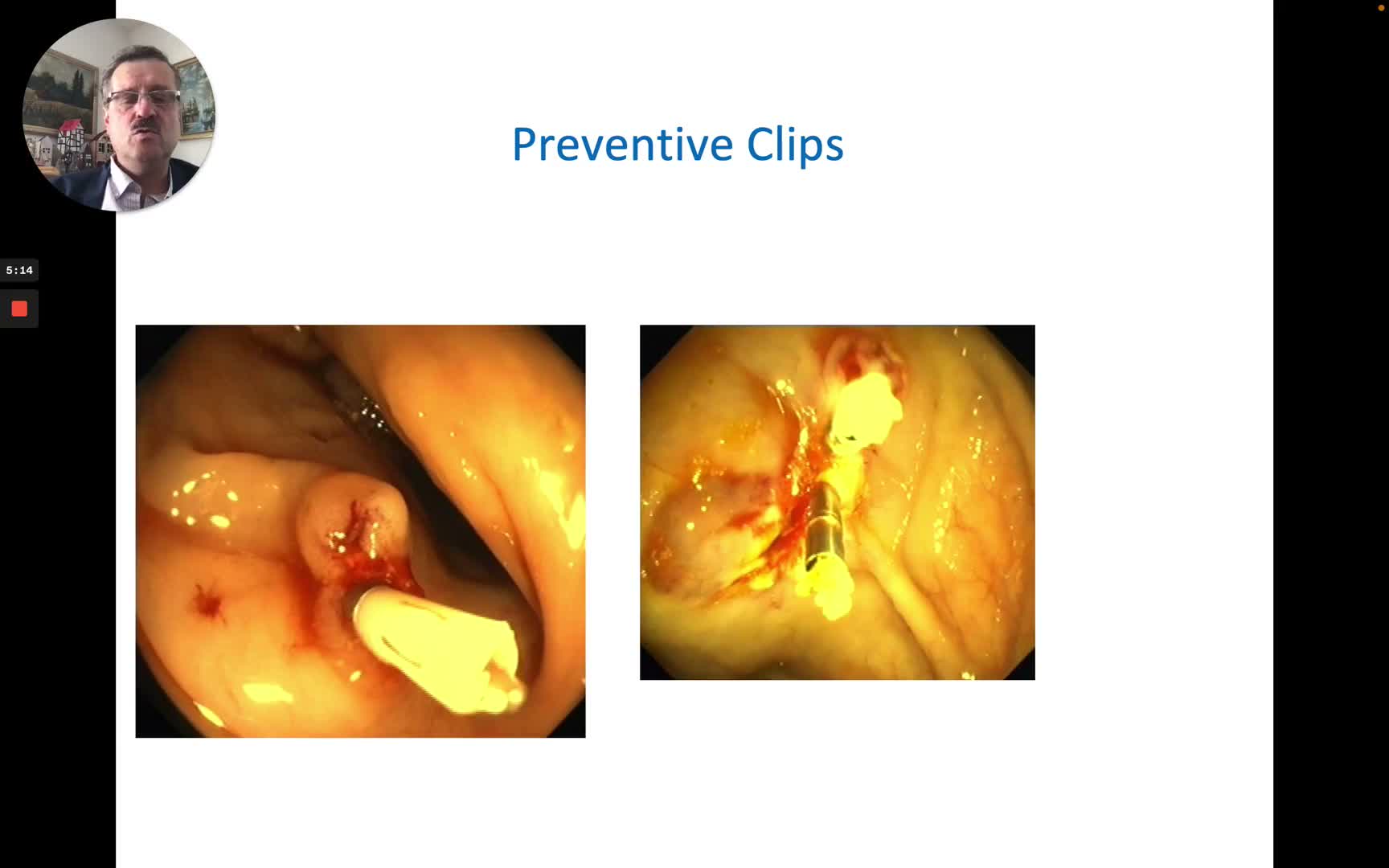
You are about to resect a large flat polyp in the right colon. The patient takes apixaban. The resection itself is straightforward, but what happens after you cut determines whether the patient comes back over the weekend with delayed bleeding. Two decisions made before the snare closes can dramatically reduce that risk: prophylactic clipping and proper submucosal injection.
In this five-minute segment from the EndoCollab course library, Prof. Klaus Monkemuller covers both techniques with real cases, including a side-by-side comparison of submucosal injection done wrong versus done right.
Prophylactic Clipping: When the Data Says No but Experience Says Yes
A landmark individual patient data analysis of over 5,000 patients with nearly 9,000 polypectomies showed that prophylactic clipping reduced delayed bleeding for proximal polyps 20 mm or larger (OR 0.62, 95% CI 0.44-0.88). The number needed to treat was 32. For patients on antithrombotics, the benefit was even stronger (NNT = 23).
For distal polyps, the data did not show a statistically significant benefit. But Prof. Monkemuller offers a practical counterpoint. A large polypectomy on the left side, performed on a Friday afternoon, in a patient who forgot to mention their anticoagulant: these are the cases that present with bleeding over the weekend. The confidence intervals in the meta-analysis are wide. “Rely on your instinct,” he advises, “and not only on data from studies.”
Watch the Full Lecture
This clip is from the EndoCollab course library. Members get access to the complete lecture plus 150+ endoscopy videos with chapters and captions.
Continue reading with a membership
Get access to the full content, course videos, case library, and our private WhatsApp community.
Already a member? Log in
We protect your privacy. No spam. Unsubscribe anytime.