Your channel is on the left. The bleeder is on the right.
A 2.5-minute case from my upper GI bleeding lecture. Watch the case, pick your move, then see what we did.
This is the bleed that makes a night call long. The vessel is in view. The needle is out. It will not go where the blood is.
1. The case
A massively bleeding Dieulafoy lesion in the posterior duodenum, on the right side of the screen.
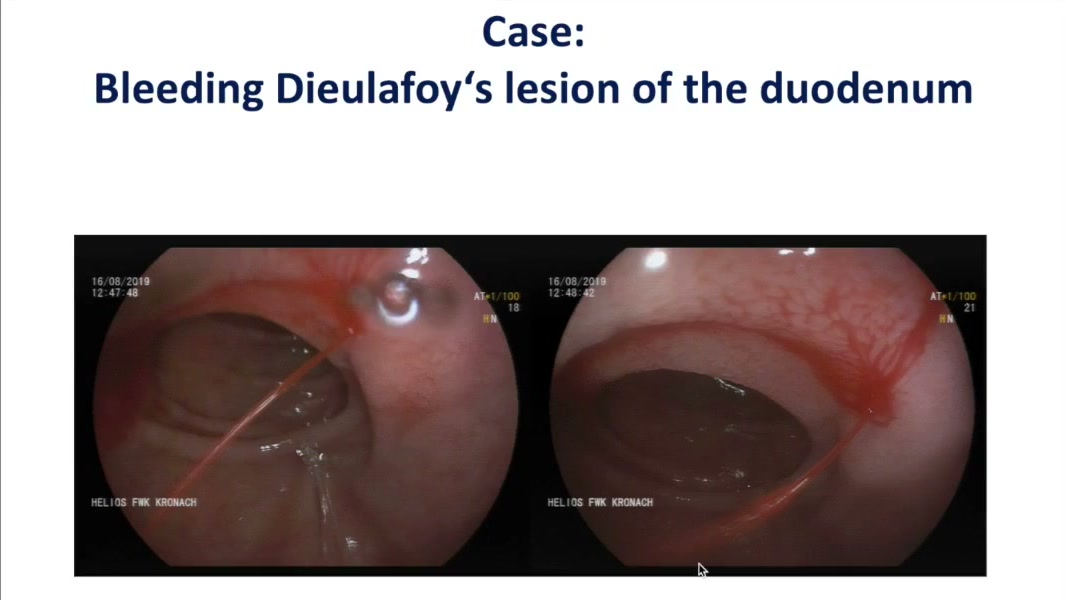
2. Torque, reposition, still bleeding
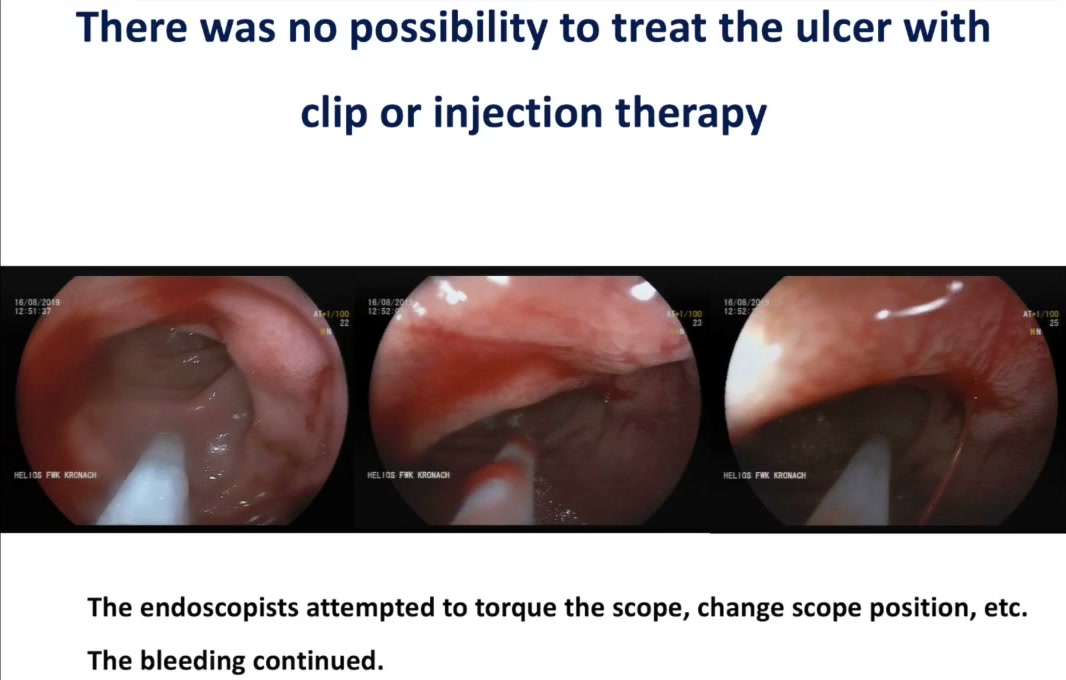
The working channel of most gastroscopes is on the left, usually at 7 o’clock, and at 8 o’clock on some therapeutic scopes. This lesion was on the right, at 3 o’clock. The fellow could not reach it to inject or target it, despite torquing and changing position. There was no way to treat it with a clip or injection from that scope. The bleeding continued.
3. What would you do?
Pick one before you read on:
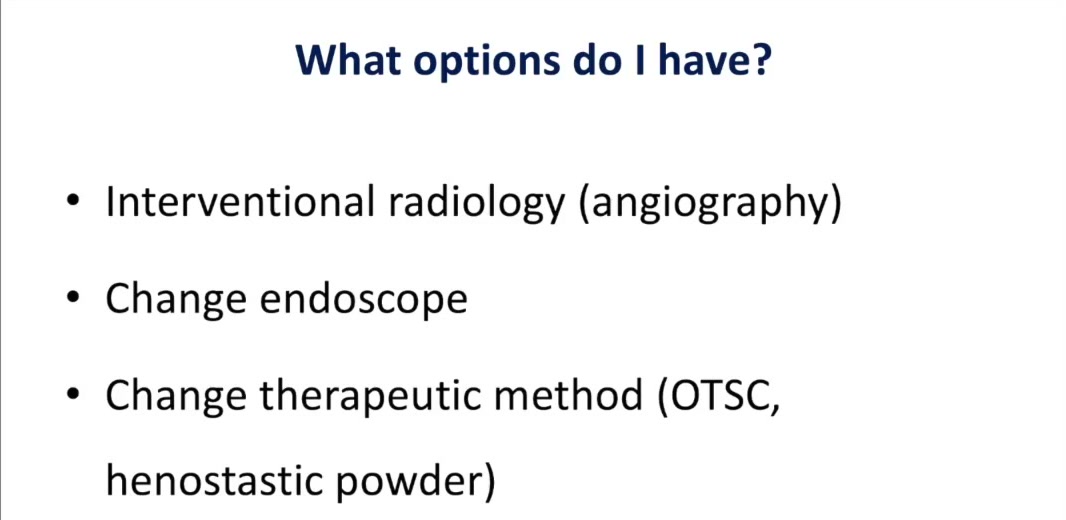
A. Call interventional radiology for angiography.
B. Change the endoscope.
C. Change the method: over-the-scope clip or hemostatic powder.
All three are reasonable and correct. One of them is a trick we published about 10 years ago, and I use it often for lesions on the right side.
Why is a right-sided duodenal bleeder hard to reach with a gastroscope?
The working channel of most gastroscopes exits on the left, at about 7 o’clock, and at 8 o’clock on some therapeutic scopes. In this case the lesion sat on the right, at 3 o’clock, so the needle could not reach it despite torque and position changes.
What are the options when you cannot reach a bleeding duodenal lesion?
The lecture lists three: interventional radiology (angiography), changing the endoscope, or changing the therapeutic method, such as an over-the-scope clip or hemostatic powder. Klaus calls all three reasonable and correct.
What we did next is at 1:28
Which option solved it, and why it works.
Members watch the full clip: the move that solved this case, the slide that shows why it works, and the other correct answer. Plus the full lecture and every other course video.
Watch the answer: $29.99 a month
Cancel anytime. Or $199.99 a year.
Already a member? Log in and the full clip plays.
Continue reading with a membership
Get access to the full content, course videos and the case library. Lifetime members also get our private WhatsApp group as a free bonus.
Already a member? Log in
We protect your privacy. No spam. Unsubscribe anytime.