Yao VS classification: a step-by-step guide to scoring mucosal surface, subsurface vessels, and the demarcation line when you inspect the stomach for early gastric cancer.
You are looking at a subtle gastric lesion. Detection is only half the job. If the report says “suspicious area” without a structured surface and vessel score, the next endoscopist cannot reconstruct what you saw.
Why Free-Text Characterization Falls Short
Klaus Mönkemüller frames endoscopic inspection around two essential steps: the mucus and mucosal surface, and the subsurface submucosal vascular pattern. Skip either one and characterization is incomplete.
Those subsurface vessels matter because angiogenesis is a marker for tumor. Folkman showed in the 1971 New England Journal of Medicine that tumor growth is angiogenesis-dependent. When you find angiogenesis in vivo, the likelihood of neoplasia or advanced neoplasia rises.
So gastric cancer work has two endoscopic jobs: detection and characterization. Characterization needs a shared language. That language is the Yao vessel-plus-surface (VS) classification.
Step 1: Inspect Surface and Subsurface Vessels
Start with the two essential checks. Look at the mucus and mucosal surface. Then look under the surface for the submucosal vascular pattern in the submucosal space.
Video moment @ 0:27
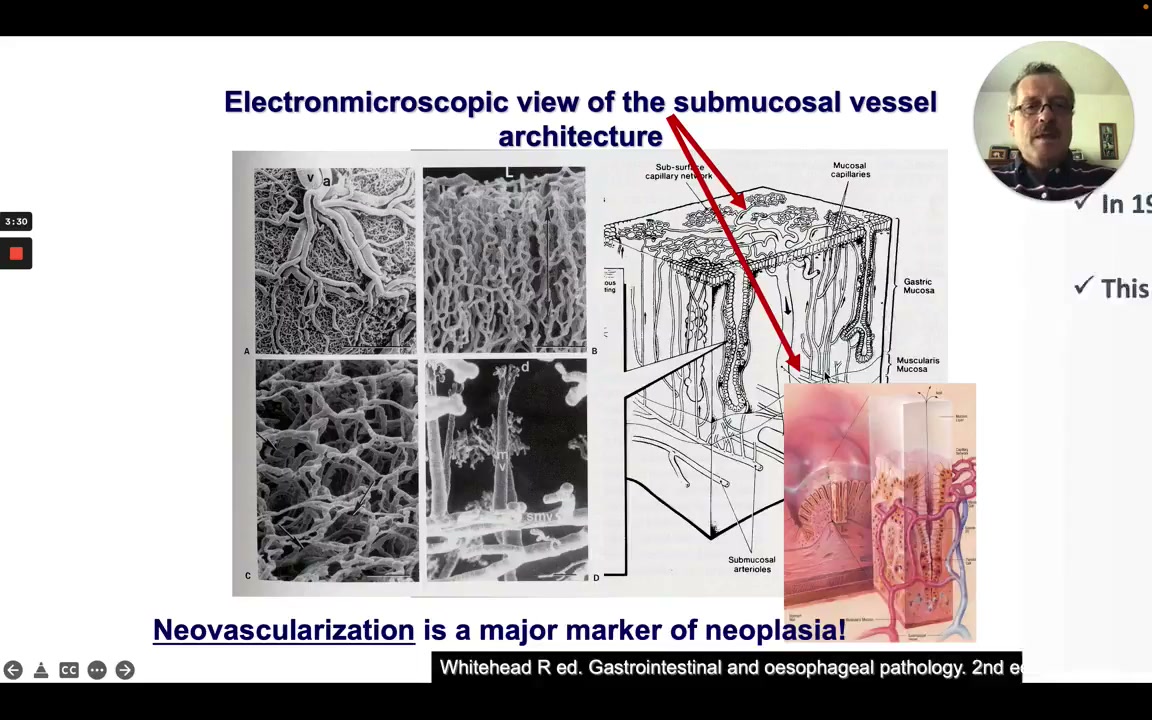
Significance: Characterization is not a single glance at color or shape. Surface and subsurface vessels are both required.
Step 2: Treat Angiogenesis as a Tumor Signal
Why spend time on vessels? Because angiogenesis marks tumor biology. Folkman proposed in 1971 that tumor growth is angiogenesis-dependent. An in vivo way to see microvascular change in superficial neoplasms is therefore useful for early gastrointestinal tumor diagnosis.
Video moment @ 0:55
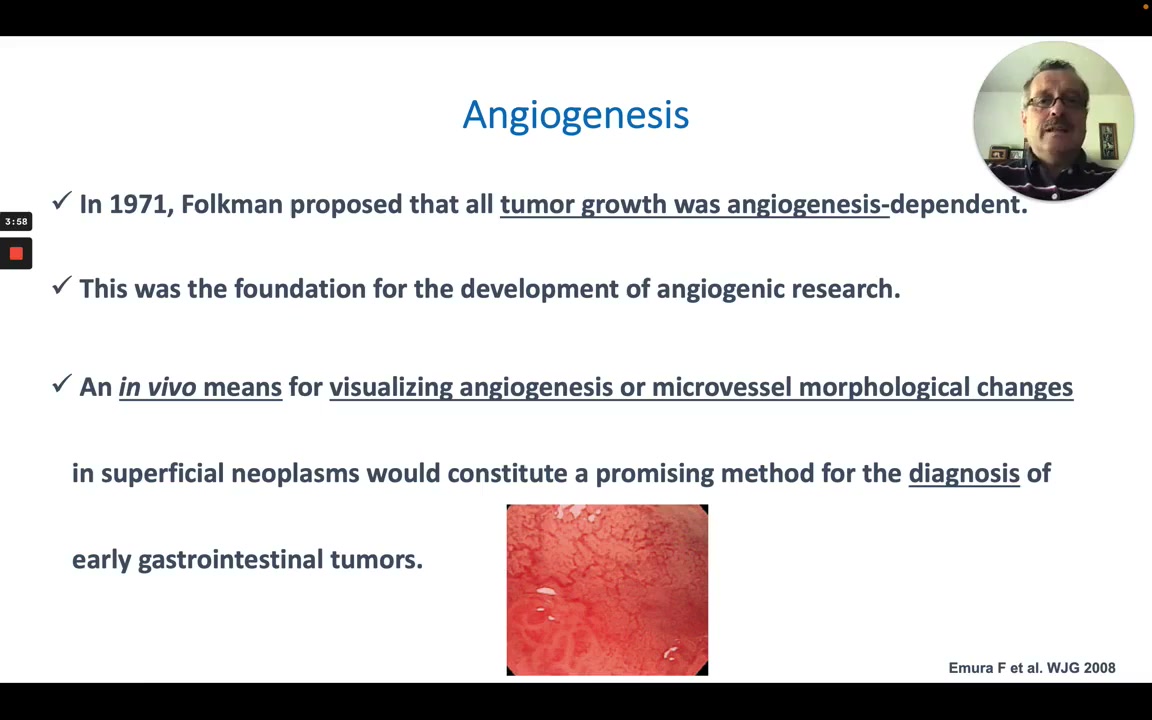
Significance: Detection finds the lesion. Vessel morphology helps decide whether the lesion behaves like neoplasia.
Step 3: Score With the Yao VS Classification
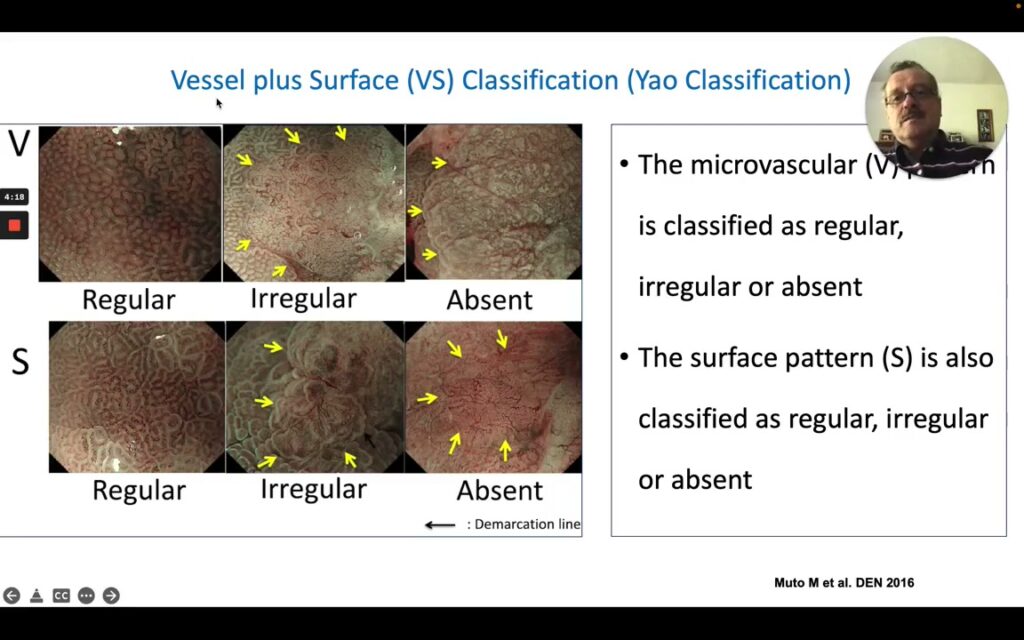
Yao proposed the vessel-plus-surface (VS) classification. Score vessels and surface independently. Each category is one of three states:
- Vessels (V): regular, irregular, or absent
- Surface (S): regular, irregular, or absent
Video moment @ 1:15
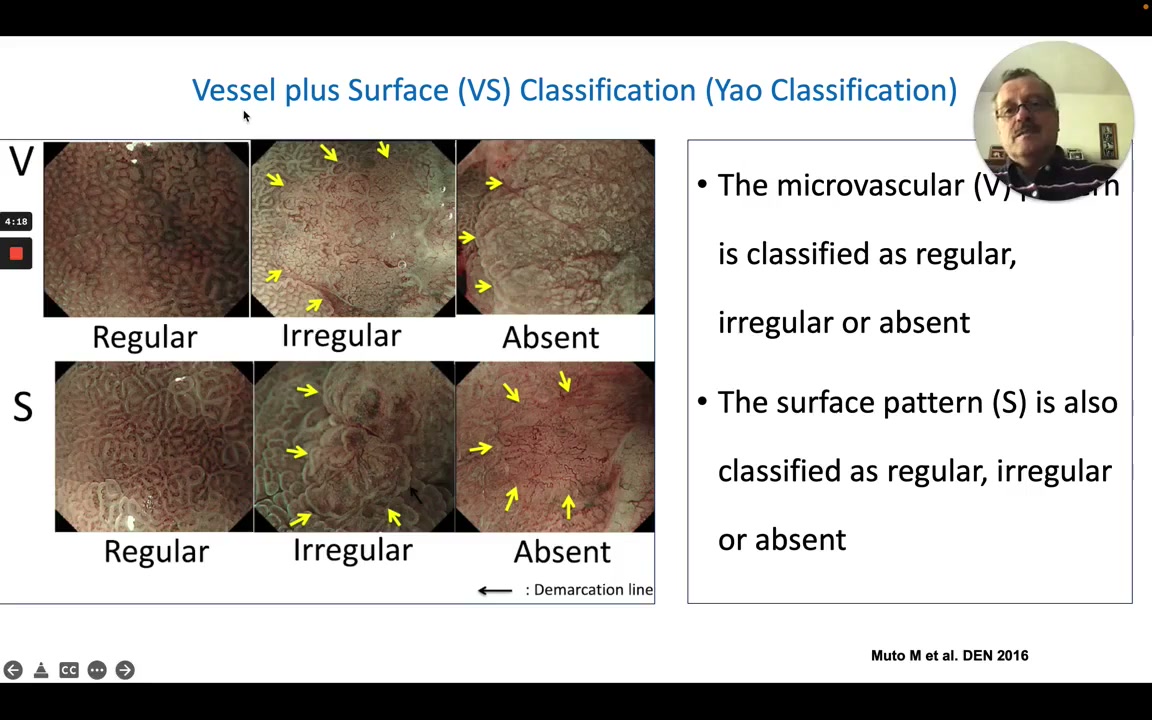
Significance: This is the shared vocabulary. “Irregular vessels with absent surface” means the same thing to the next reader. “Odd looking area” does not.
The result you want in the note looks like this:
Yao VS: surface irregular, vessels irregular, demarcation line present.
Continue with a membership
Members get the demarcation-line walkthrough, a paste-ready report template, the full workflow summary, and the complete 2-minute video with captions.
Same format as our Prague classification guides: actionable steps you can use on the next case.
Already a member? Log in
Continue reading with a membership
Get access to the full content, course videos, case library, and our private WhatsApp community.
Already a member? Log in
We protect your privacy. No spam. Unsubscribe anytime.