Andres Gutierrez, MD; Klaus Mönkemüller, MD, PhD, FASGE, FJGES
Department of Gastroenterology, Carilion Memorial Hospital, Virginia Tech Carilion School of Medicine, Roanoke, VA, USA
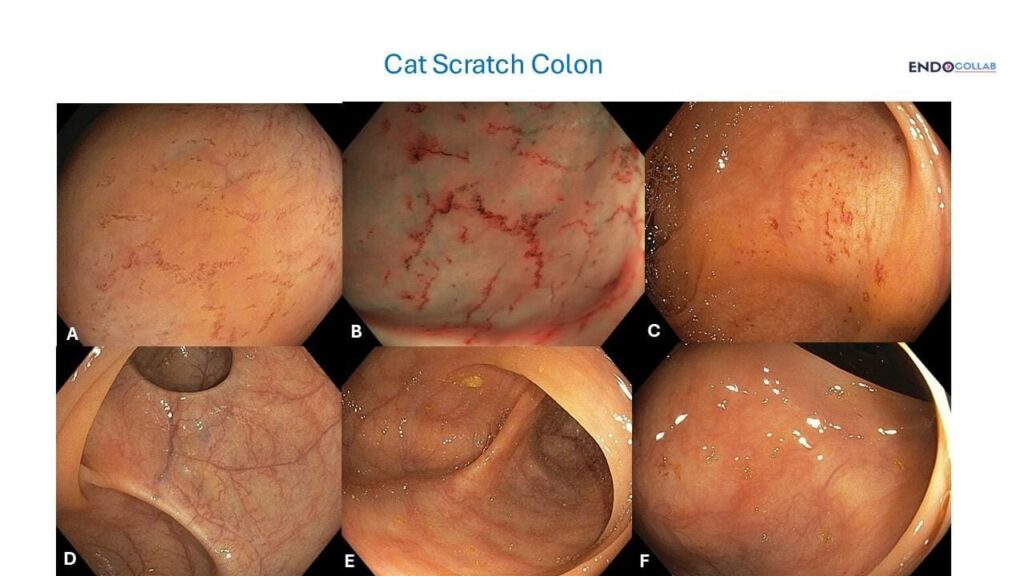
A 75-year-old woman underwent colonoscopy for obscure gastrointestinal bleeding. Her procedure revealed a tortuous colon with numerous diverticula. Upon entering the ascending colon and cecum, multiple red mucosal lesions were found (Figure 1).
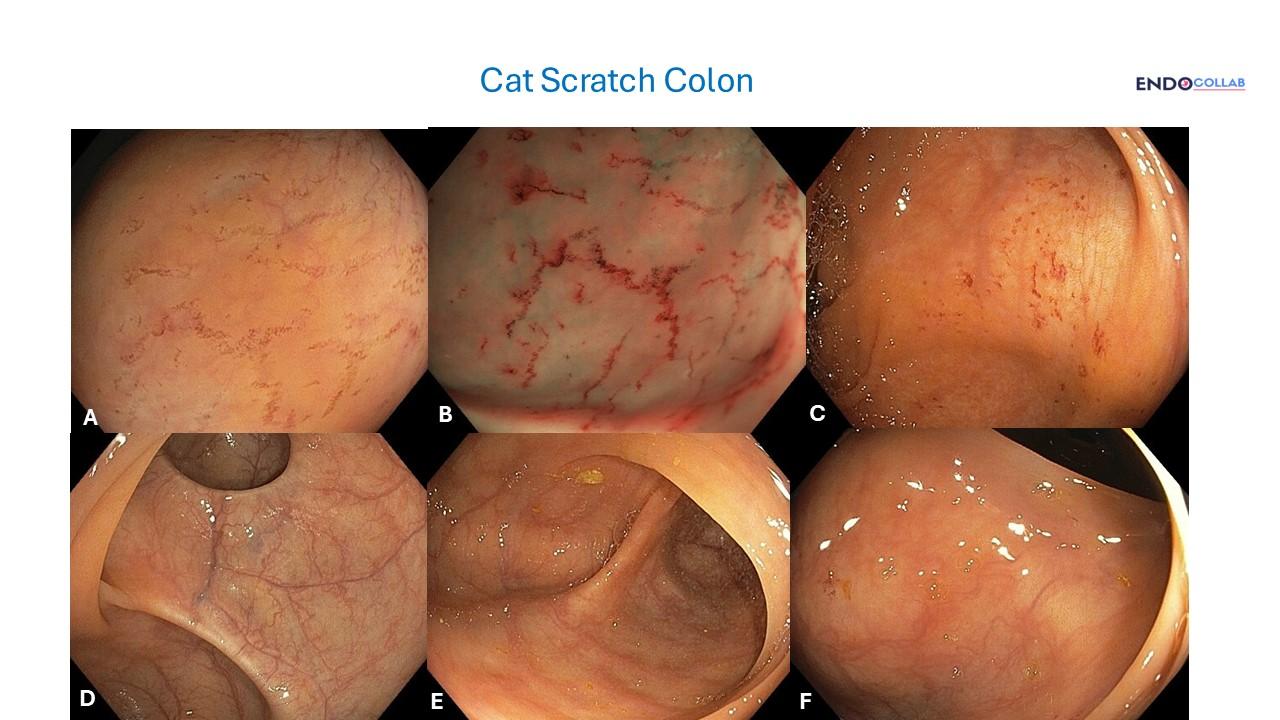
Figure 1. Endoscopic findings of “cat scratch colon.” (A-C) Multiple bright red, linear marks on the mucosa of the ascending colon, resembling cat scratches. (D-F) A sharp, tight angulation in the distal ascending colon responsible for causing the barotrauma.
This was the characteristic appearance of “cat scratch colon.” Cat scratch colon is a colonoscopic finding characterized by mucosal tears or lacerations. These are usually a benign, superficial finding resulting from barotrauma during colonoscopy when CO₂ or air is used to insufflate the colon. Some underlying pathologies such as collagenous colitis or ischemic colitis may predispose to barotrauma and cat scratch colon. In this case, the etiology was pure barotrauma, resulting from CO₂ getting entrapped in the cecum and ascending colon due to a tight angulation in the distal ascending colon, which created a tight valve mechanism (Panels D, E, F).
In most cases, cat scratch colon is a harmless, incidental finding during colonoscopy and doesn’t require specific treatment. However, it’s important to recognize the finding and consider potential contributing factors.