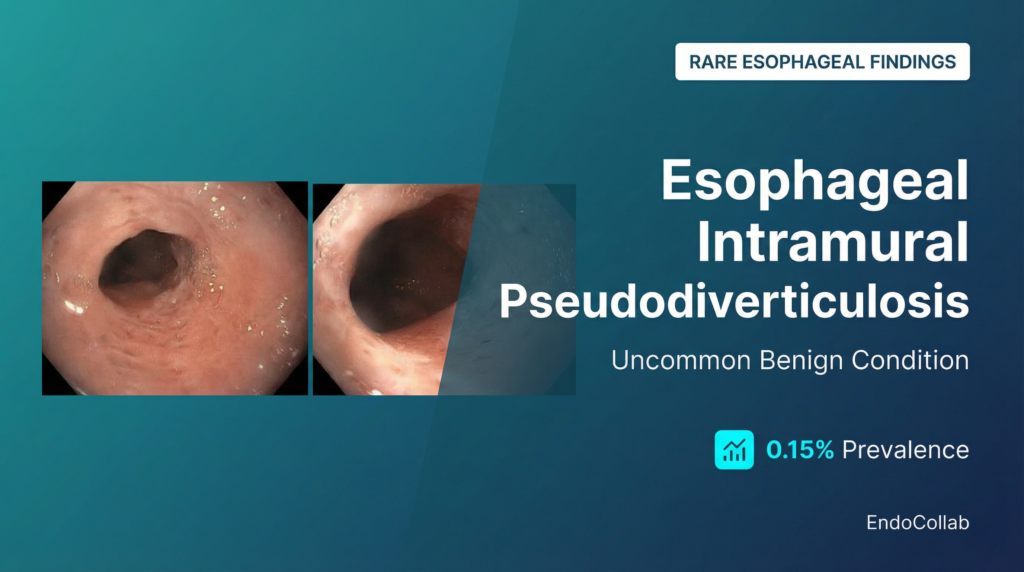
CASE IMAGE
Esophageal intramural pseudodiverticulosis (EIP) is an uncommon, benign condition characterized by multiple tiny, flask-shaped openings within the wall of the esophagus, representing dilated excretory ducts of the esophageal submucosal glands.
Abstract
Esophageal intramural pseudodiverticulosis (EIP) is an uncommon, benign condition characterized by multiple tiny, flask-shaped openings (in barium esophagogram – outpouchings) (tiny diverticula) within the wall of the esophagus (1). These “pseudodiverticula” are actually dilated excretory ducts of the esophageal submucosal glands rather than true protrusions or diverticula of the mucosal layer through the muscle wall. The condition involves the cystic dilation of submucosal gland ducts, often associated with chronic inflammation and periductal fibrosis. It is extremely rare, found in approximately 0.15% of barium swallow examinations (1, 2).
Keywords: esophageal intramural pseudodiverticulosis; EIP; pseudodiverticula; submucosal glands; esophageal stricture; barium esophagogram
★ Key Clinical Takeaways
- EIP is characterized by multiple tiny, flask-shaped outpouchings within the esophageal wall, representing dilated excretory ducts of submucosal glands rather than true diverticula.
- The condition is extremely rare (approximately 0.15% of barium swallow examinations) and most commonly diagnosed in the 6th and 7th decades of life with a slight male predilection.
- Outpouchings can be diffuse (60%) or segmental (40%), with segmental cases often occurring in the upper esophagus; mid-to-distal involvement may be linked to eosinophilic esophagitis (EoE).
- EIP is associated with GERD, diabetes mellitus, chronic alcoholism, tobacco use, and esophageal dysmotility disorders. Treatment targets the underlying condition, with dilation for associated stenosis.
Case Presentation
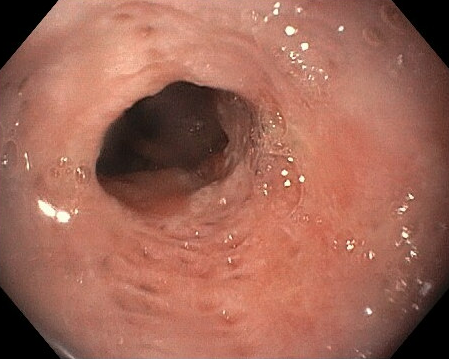
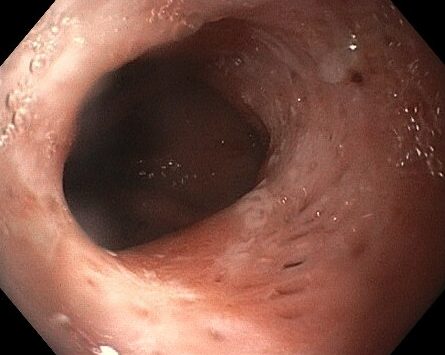
Esophageal intramural pseudodiverticulosis (EIP) is an uncommon, benign condition characterized by multiple tiny, flask-shaped openings (in barium esophagogram – outpouchings) (tiny diverticula) within the wall of the esophagus (1). These “pseudodiverticula” are actually dilated excretory ducts of the esophageal submucosal glands rather than true protrusions or diverticula of the mucosal layer through the muscle wall.
The condition involves the cystic dilation of submucosal gland ducts, often associated with chronic inflammation and periductal fibrosis. Most commonly diagnosed in the 6th and 7th decades of life, with a slight predilection for males. It is extremely rare, found in approximately 0.15% of barium swallow examinations (1, 2).
The outpouchings can be diffuse (60%) or segmental (40%). Segmental cases often occur in the upper esophagus, while recent studies also link mid-to-distal involvement with conditions like eosinophilic esophagitis (EoE). EIP is associated with GERD, DM, chronic alcoholsm, tobacco use and esophageal dysmotility disorders (1-3).
Treatment is focused on the primary conditions. If the patient has associated stenosis dilation may be necessary (3).
References
- Shintaku M. Esophageal intramural pseudodiverticulosis. World J Gastroenterol. 2024 Jan 14;30(2):137-145. doi: 10.3748/wjg.v30.i2.137. PMID: 38312118; PMCID: PMC10835521.
- Hahne M, Schilling D, Arnold JC, Riemann JF. Esophageal intramural pseudodiverticulosis: review of symptoms including upper gastrointestinal bleeding. J Clin Gastroenterol. 2001 Nov-Dec;33(5):378-82. doi: 10.1097/00004836-200111000-00007. PMID: 11606853.
- Hahne M, Schilling D, Arnold JC, Riemann JF. Esophageal intramural pseudodiverticulosis: review of symptoms including upper gastrointestinal bleeding. J Clin Gastroenterol. 2001 Nov-Dec;33(5):378-82. doi: 10.1097/00004836-200111000-00007. PMID: 11606853.