
Six Top Tips to Use Argon Plasma Coagulation When Treating Angiodysplasias: An Endoscopic Atlas
Adil S. Mir, MD, FACP Gastroenterology Fellow, Department of Gastroenterology, Carilion Memorial Hospital, Virginia Tech Carilion School of Medicine, Roanoke, USA Reid Wasserman, DO Internal Medicine Resdent, Department of Internal Medicine, Carilion Memorial Hospital, Virginia Tech Carilion School of Medicine, Roanoke, USA Klaus Klaus Mönkemüller, MD, PhD, FASGE, FJGES Professor of Medicine Department of Gastroenterology, […]
Marking Technique for Identifying and Resection Flat Colon Polypoid Lesions or Polyps in Difficult Locations
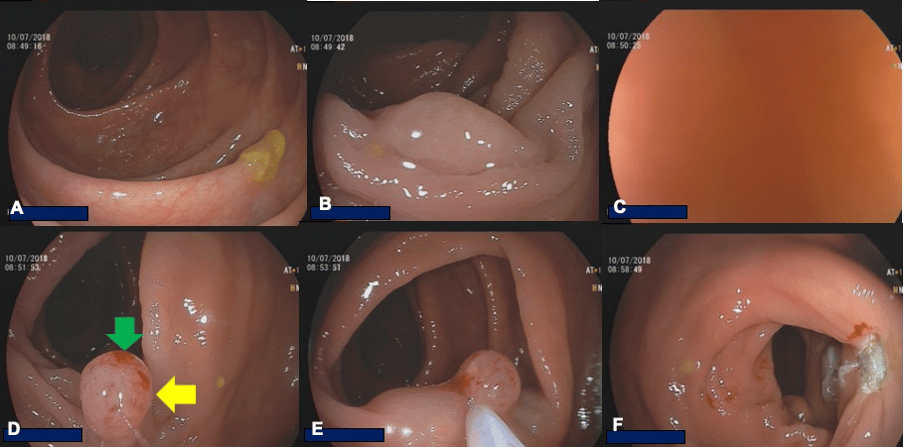
By Klaus Mönkemüller, MD, PhD, FASGE, FJGES and Reid Wasserman, DO Virginia Tech Carilion School of Medicine, Virginia, USA One of the most frustrating aspects of dealing with small, flat, diminutive colon polypoid lesions or those lying in awkward location is their “disappearance” during colonoscopy, especially when the colon is not perfectly well prepped or […]
Endoscopic Resection of LST in Ascending Colon
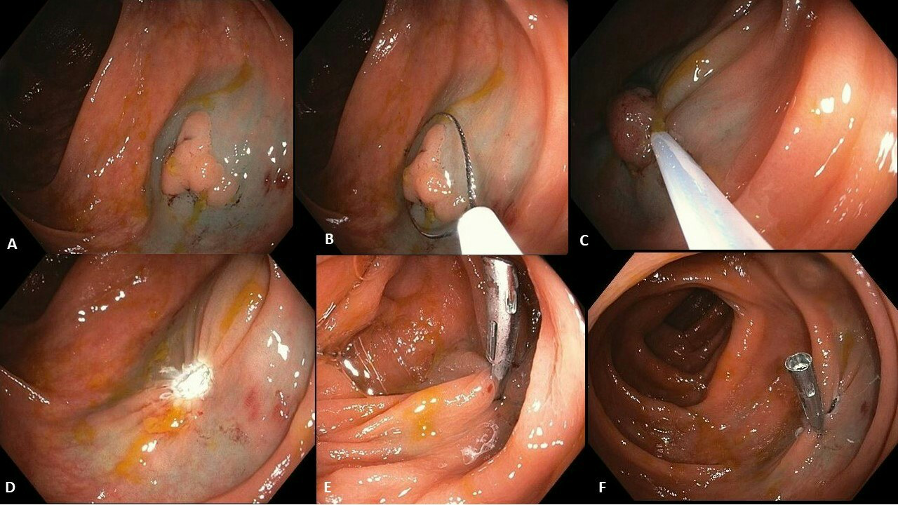
Case Report & Technique A systematic, image-guided approach to hot-snare R0 resection of a 12 mm granular LST in the ascending colon — featuring the suction-mark trick, interventional chromoendoscopy with Eleview®, and prophylactic clipping. Diana Dougherty, MD Department of Gastroenterology, Carilion Memorial Hospital, Virginia Tech Carilion School of Medicine, Roanoke, USA Klaus Mönkemüller, MD, PhD, […]
Caps in GI Endoscopy
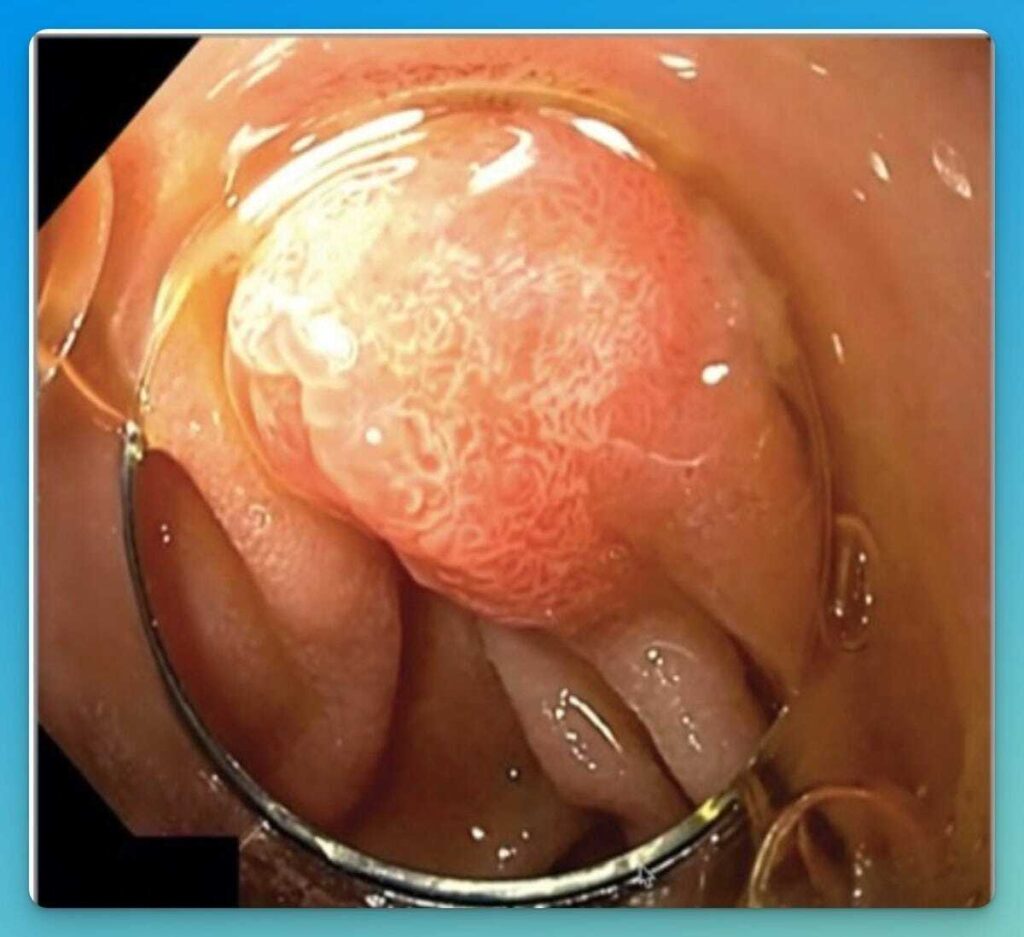
Question What is the best way to inspect the papilla of Vater in the abscence or lack of availability of a duodenoscope (side-viewing scope, ERCP scope)? Answer Today we present a useful tip for inspection of the papilla of Vater using distal transparent cap. A close and detailed inspection of the major papilla may be […]
What are the Palisade Veins?
The palisade vessels are tiny capillaries (or veins) located in the distal submucosa of the esophagus and are quite important to distinguish esophagus from stomach. Whereas in most countries endoscopists use the beginning of the proximal gastric folds to determine the location of the gastopesophageal junction, in Japan and other astern countries, but also many […]
Cronkhite Canada Syndrome (CCS)
A 48-year-old woman presented with chronic diarrhea and loss of taste. On clinical exam she appeared pale, had brittle nails and had partial hair loss. She was found to have severe iron deficiency anemia. Colonoscopy showed multiple reddish, edematous mucosal streaks and polyps and pseudopolyps ranging from 5 to about 20 mm. On EGD […]
The MIRacle Sign
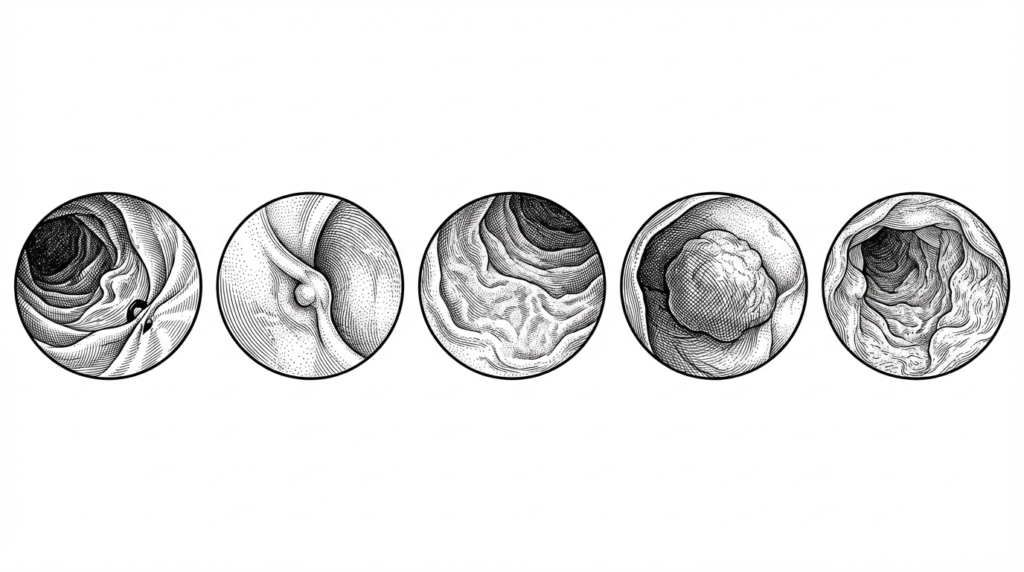
Adil S. Mir MD FACP; Klaus Mönkemüller MD, PhD, FASGE, FJGES Virginia Tech Carilion School of Medicine, Roanoke, VA, USA Upper gastrointestinal (GI) endoscopy or esophagogastroduodenoscopy (EGD) continues to be an extremely useful diagnostic tool for perspicuous macroscopic findings. Besides, attention to detail remains of utmost significance in deciphering clinical clues to rather uncommon pathophysiology. […]
Gastrointestinal Bleeding due to Amyloidosis: Investigating the Intersection of Rheumatoid Arthritis, Gastrointestinal Bleeding, and Amyloidosi
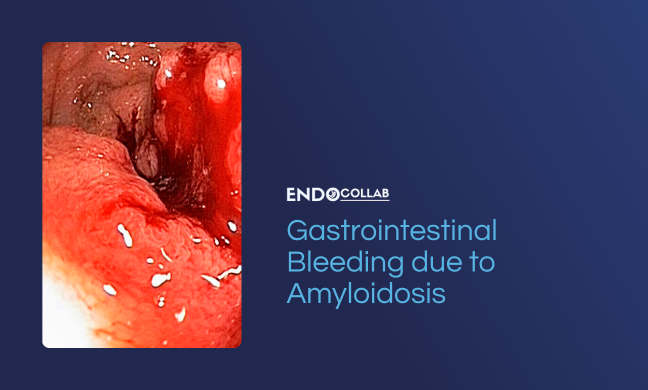
This blog post explores one such intersection – Rheumatoid Arthritis, Gastrointestinal Bleeding, and Amyloidosis. The insights shared in this post are based on the extensive research and clinical experience of…
Cameron Lesions

By: Jonathan Rozenberg, DO, MPH, Internal Medicine Resident; Klaus Mönkemüller, , MD, PhD, FASGE (USA), FJGES (Japan), Professor of Medicine; Adil, Mir, MD, FACP Institution: Virginia Tech Carilion School of Medicine, Roanoke, VA, USA Cameron lesions refer to linear erosions or ulcerations of the gastric mucosal folds in patients with a large hiatal hernia that […]
Treating Upper Gastrointestinal Bleeding: An Update on Endoscopic Techniques

By William F. Abel, MD, Internal Medicine Resident, and Klaus Mönkemüller, MD, PhD, FASGE, FJGES, Professor of Medicine Virginia Tech Carilion School of Medicine, Virginia, USA Upper gastrointestinal (GI) bleeding encompasses hemorrhage anywhere from the esophagus to the distal duodenum due to myriad etiologies including peptic ulcers, tumors, vascular malformations, esophageal varices, hemosuccus pancreaticus and […]
Improving Colonoscopy Prep and Achieving Better Boston Bowel Preparation Scores
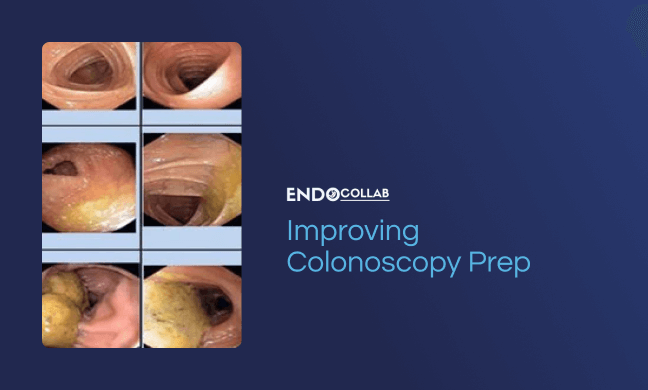
Colon cancer is the second leading cause of cancer death in the United States, with over 50,000 deaths annually. The good news is that colon cancer is preventable with proper screening. Colonoscopies allow doctors to visualize the entire colon and detect precancerous polyps before they become cancerous. However, colonoscopies cannot accurately identify polyps and early […]
Natural or Biologic Chromoendoscopy for Detection of Colorectal Polyps

By Klaus Mönkemüller, MD, PhD, FASGE, FJGES Professor of Medicine, Virginia Tech Carilion School of Medicine, Roanoke, USA The Eye Beats Artificial Intelligence: How Biologic Chromoendoscopy Improves Detection of Colorectal Polyps Introduction Colorectal cancer is one of the most prevalent and fatal cancers globally, resulting in over 900,000 deaths annually. Early detection and removal of […]