
Extreme ERCP: getting a duodenoscope through a closed esophagus
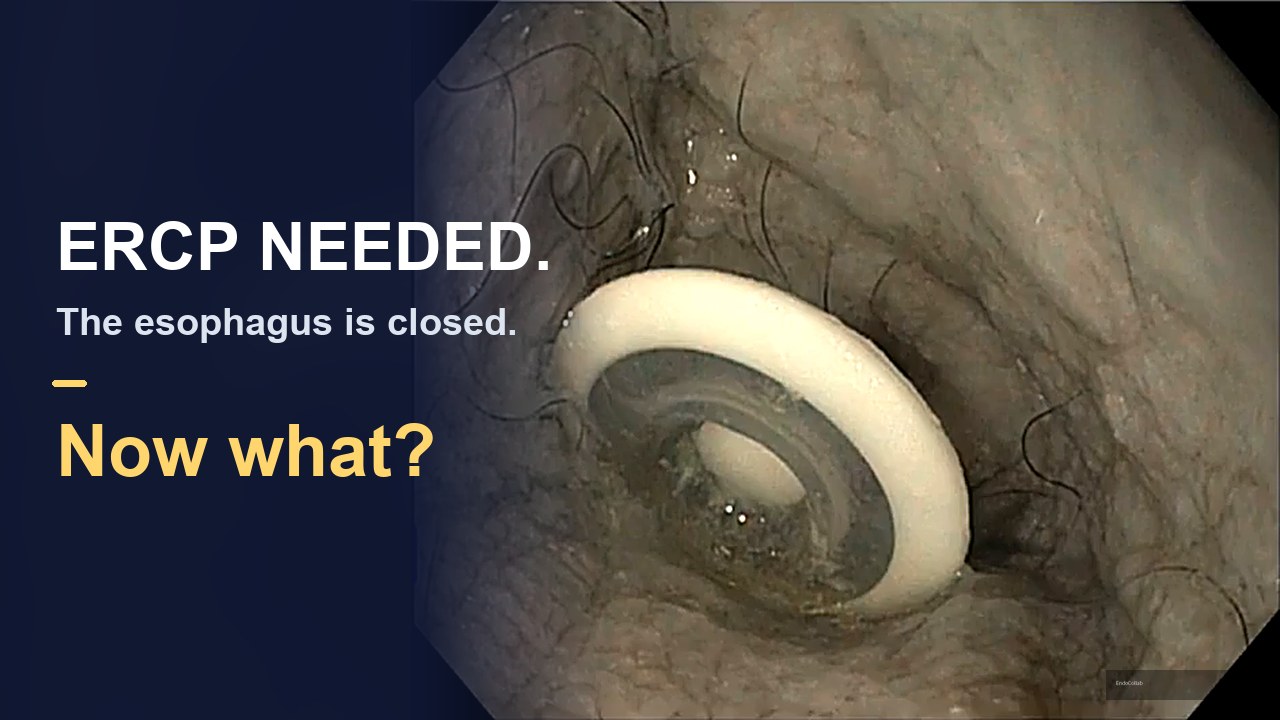
A 3-minute guide to extreme ERCP: when the duodenoscope cannot pass the esophagus, build a bridge with an overtube and let a balloon scout the way. Some ERCPs fail before the scope reaches the papilla. In this clip from his Extreme ERCP lecture, Klaus Mönkemüller defines a level V ERCP, then shows a patient with…...
Massive hematemesis the day after a Whipple: what would you do?
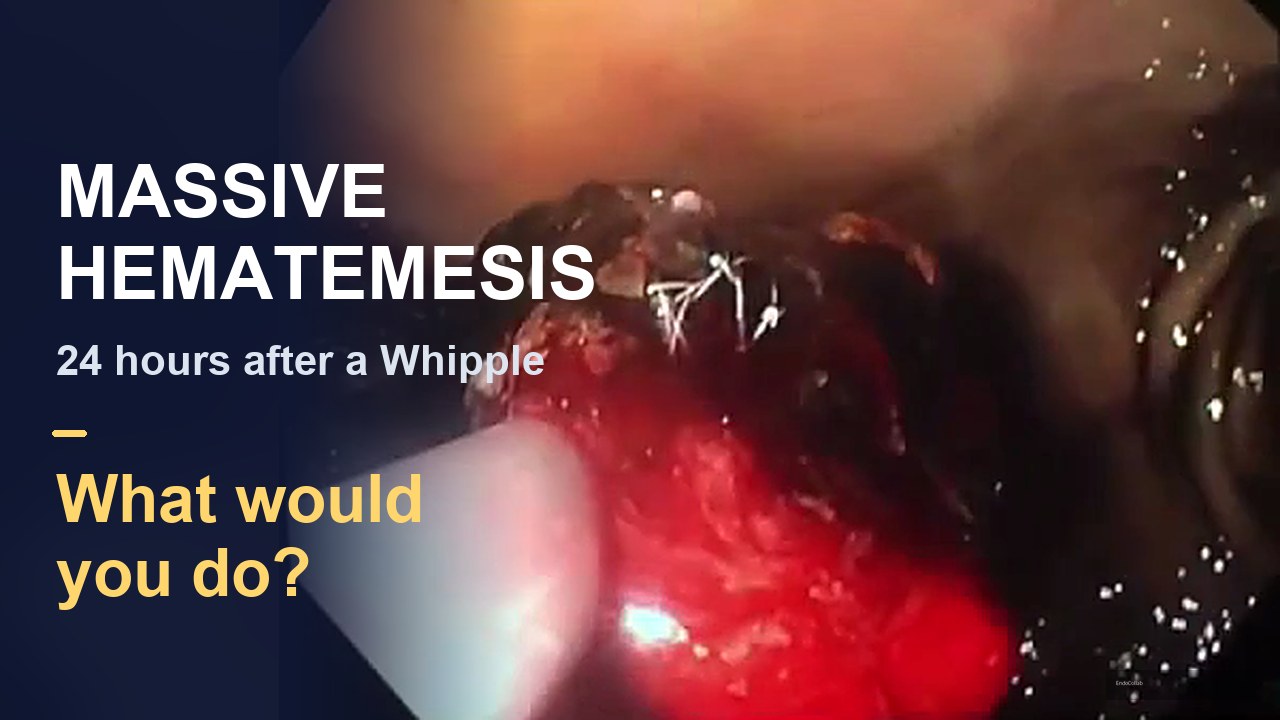
Massive hematemesis. The anastomosis is one day old. A 3-minute case from my upper GI bleeding rescue lecture. Watch the case, pick your move, then see what we did. This is the call nobody wants on the first night after a Whipple. The patient is bleeding fast. The surgical anastomosis is fresh. Every option has…...
Bleeding on the right, channel on the left: what would you do?
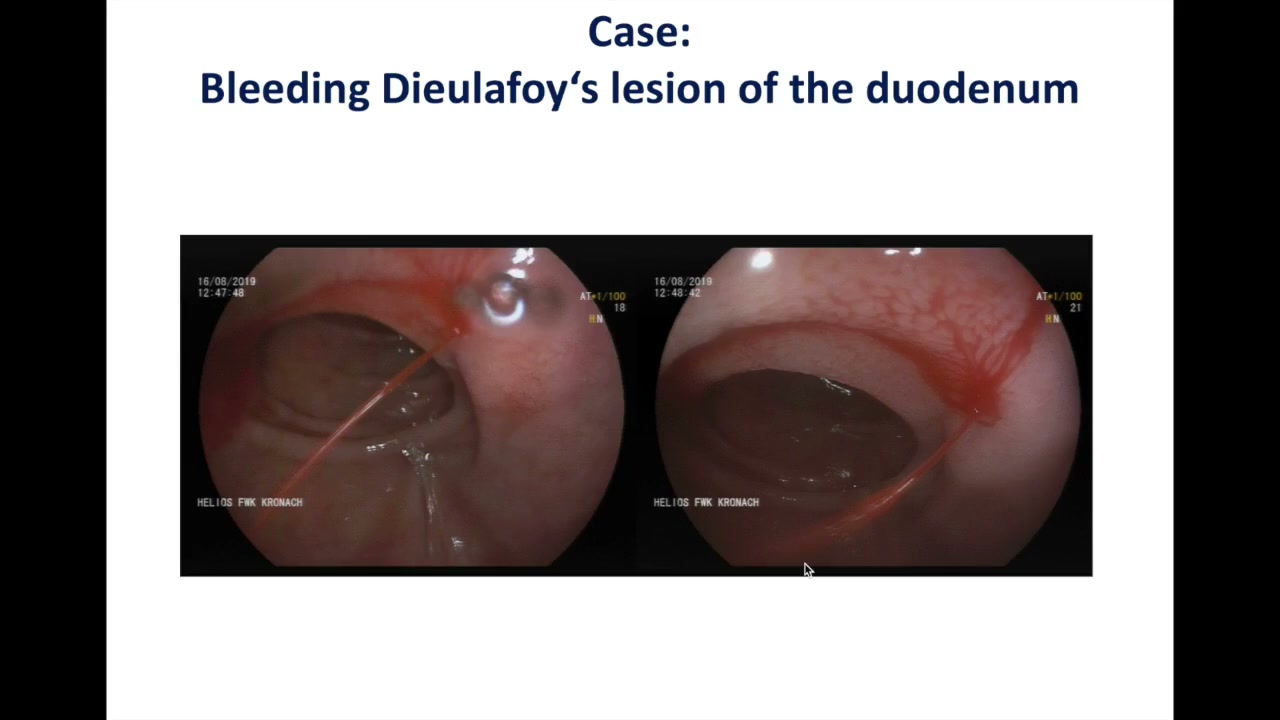
Your channel is on the left. The bleeder is on the right. A 2.5-minute case from my upper GI bleeding lecture. Watch the case, pick your move, then see what we did. This is the bleed that makes a night call long. The vessel is in view. The needle is out. It will not go…...
Short-stem clips for post-sphincterotomy bleeding
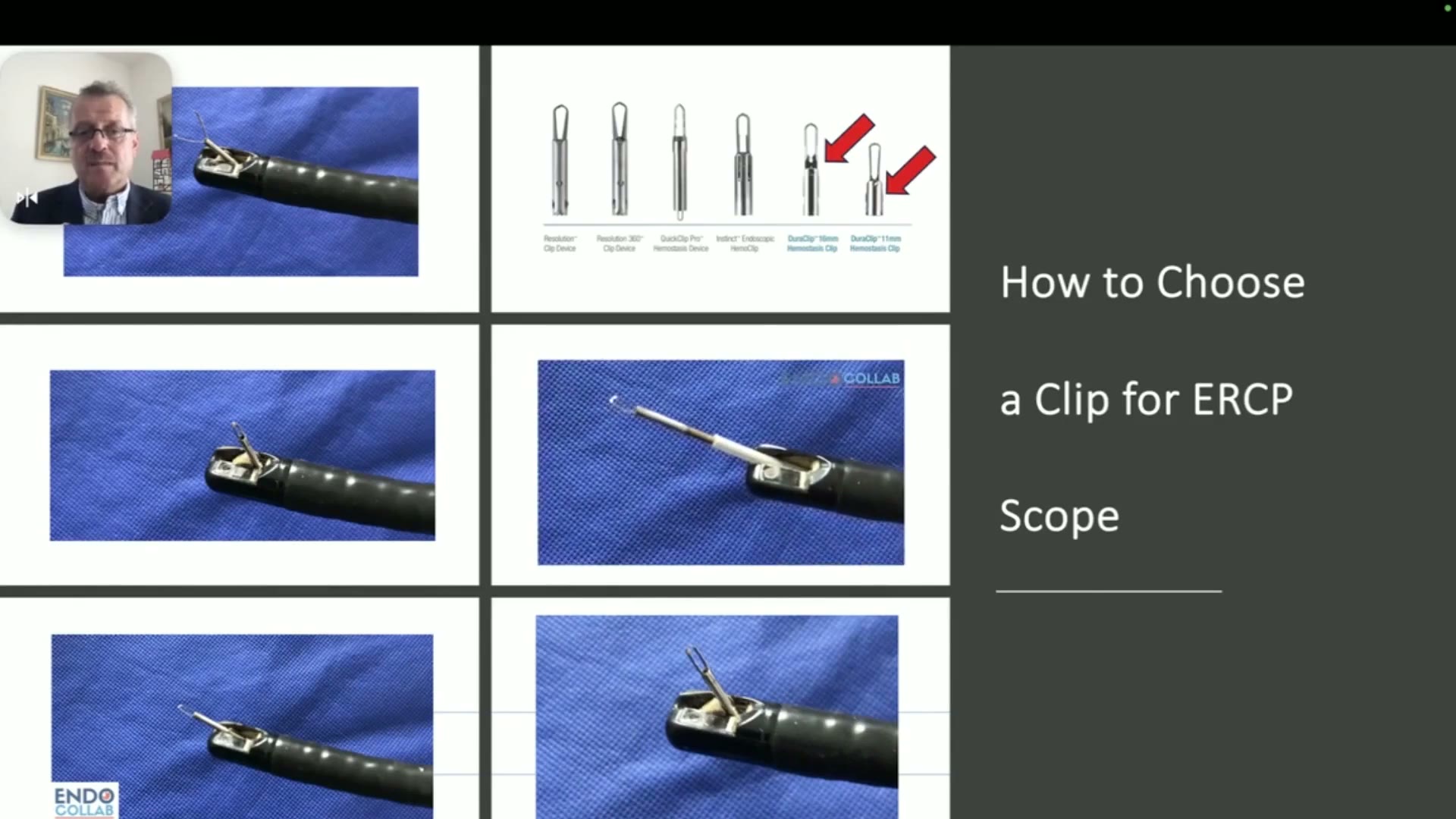
Close the vessel, not the papilla. Short stem. Sheath stays on. 11 mm on the vessel. Leave the orifice open. Post-sphincterotomy bleeding is a small vessel on the edge of a cut you still need. A long stem hangs on the elevator. A wide jaw closes the papilla. Look at the clip on the table…...
Protect the mucosa on the way out: overtube extraction for a sharp FB

After this 4-minute clip you can seat an overtube, align a sharp object to the lumen, and extract without dragging a tip across mucosa. 5-step extraction sequence 1. Seat OvertubeOvertube into stomach first, then advance scope. 2. Align AxisMatch object axis to GI lumen axis before any traction. 3. Grasp and TorqueRat-tooth hold, then scope…...
Prague C and M: a 7-minute Barrett length guide

A 7-minute guide to Prague C and M: find the tongues, measure circumferential and maximal extent at the incisors, then plan Seattle biopsies. If the next endoscopist opens your note and only sees “short Barrett” or “long tongues,” can they reconstruct the segment? Prague C and M is the shared language: C is circumferential extent,…...
Cap-Assisted Hemostasis: Circular Cap, Load-and-Pull, Then Target

A 5-minute guide to cap-assisted hemostasis: circular distal cap, load-and-pull the clip, then target. A bleeding vessel in the duodenal bulb is hard to face with a bare gastroscope tip. Visualization, stability, and suction-trap of the vessel are weaker without a cap. A pyramidal cap can trap the clip on the way in. In this…...
Esophageal Stricture Dilation: Wire Rules, the Flipped Wire Technique, and the Rule of Three
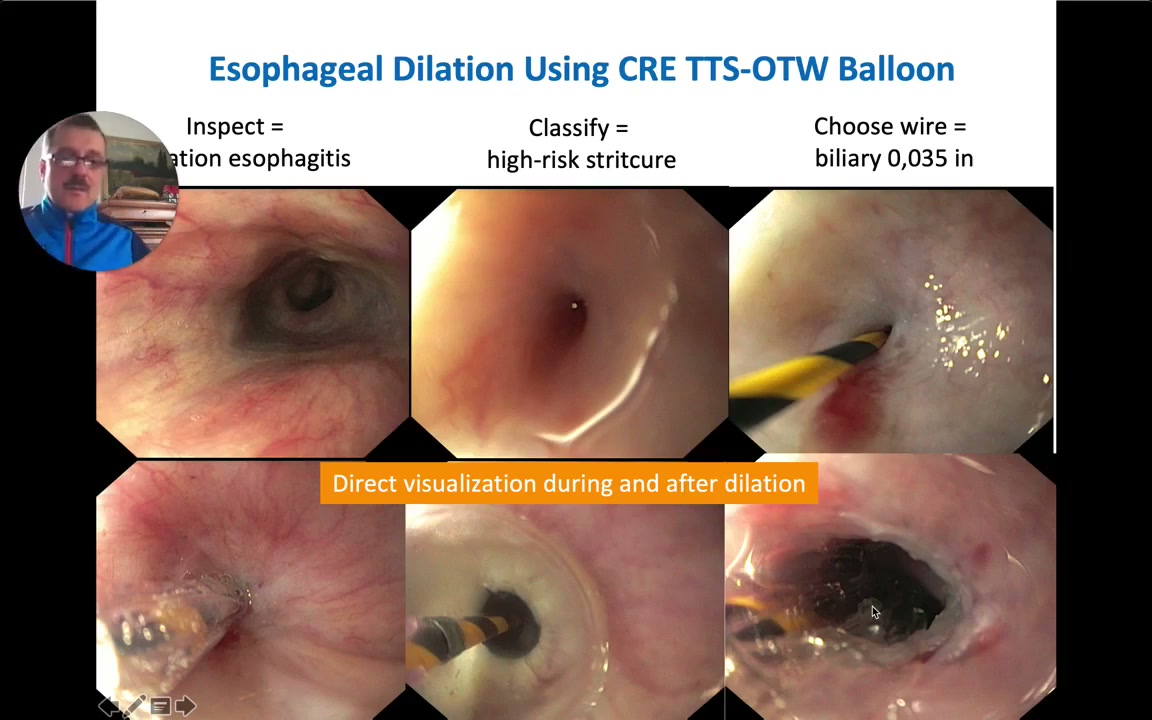
A 7-minute guide to safe esophageal stricture dilation: read the wire, pass the stricture under control, and stop by rule, not by ambition. You are looking at a tight esophageal stricture. The lumen is a pinhole and you cannot see what lies beyond it. The wire is in your assistant’s hand. Do you advance it…...
Endoscopic Foreign Body Removal: Timing, Tools, and Technique
When a swallowed object needs emergency endoscopy, what belongs in the foreign-body tray, and how to extract sharp objects safely — from Dr. Klaus Mönkemüller’s toolbox lecture series.
KAR Hybrid ESD-EMR: Circumferential Tip-of-Snare Incision

A 6-minute guide to knife-assisted resection (KAR): circumferential tip-of-snare incision, then snare lift for hybrid ESD-EMR. Piecemeal EMR on a broad lateral spreading tumor often leaves you guessing about lateral margins. Full ESD is elegant, but not every unit needs a dedicated knife for every flat lesion. Knife-assisted resection (KAR), also called hybrid ESD-EMR or…...
Wire-Guided Basket Extraction for Difficult Bile Duct Stones

Wire-guided basket extraction: a step-by-step guide to when freehand fails, how to load a standard basket over the wire, and how to finish with leverage when the stone will not come. You have a complex stone in a dilated, irregular bile duct after secondary cholangitis. A freehand basket may never reach the left intrahepatic system…....
Snare Tip Assisted ESD EMR
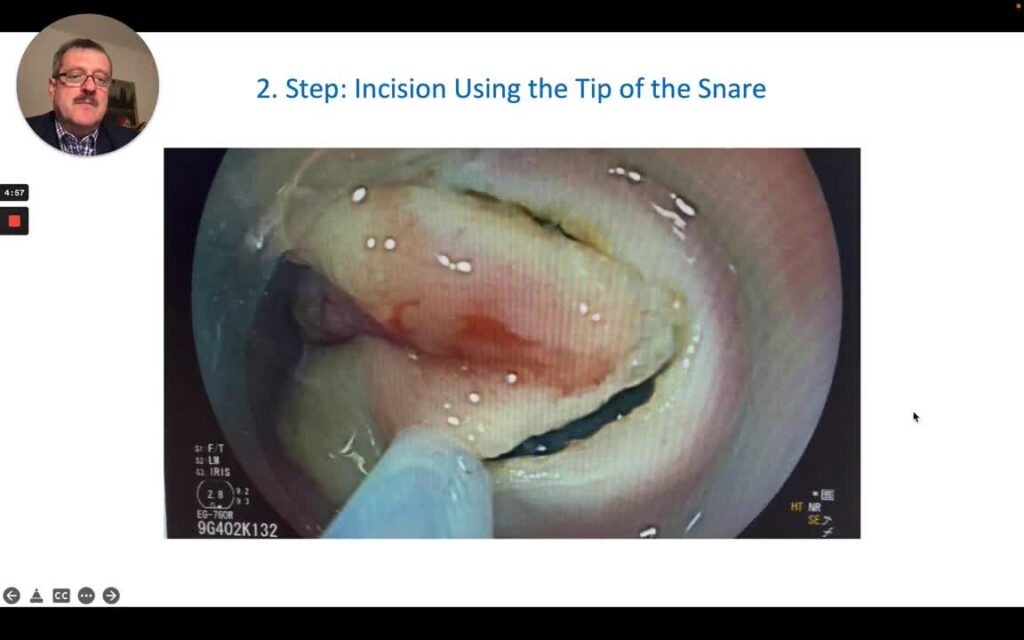
… Membership Required You must be a member to access this content.Already a member? Log in here...